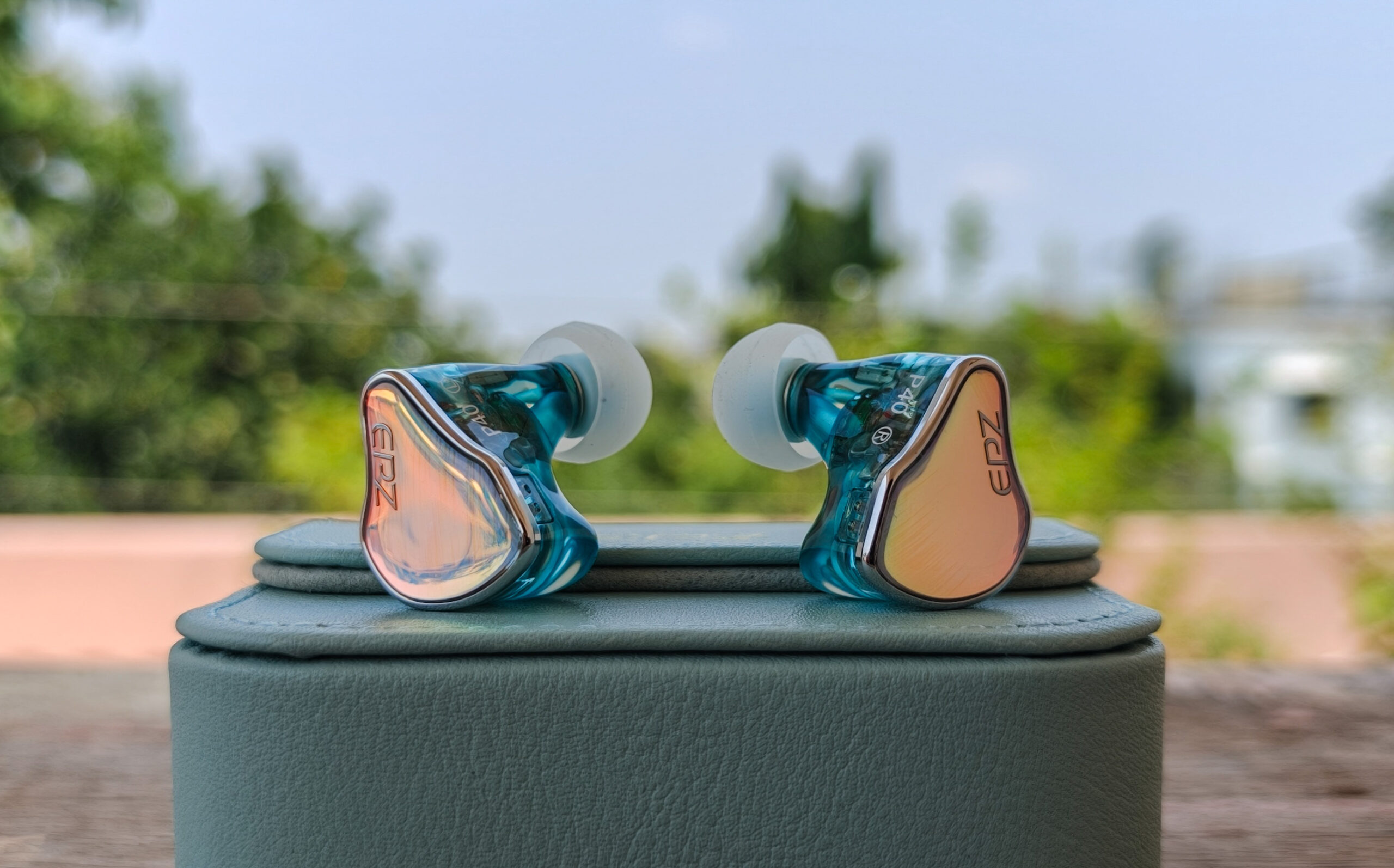


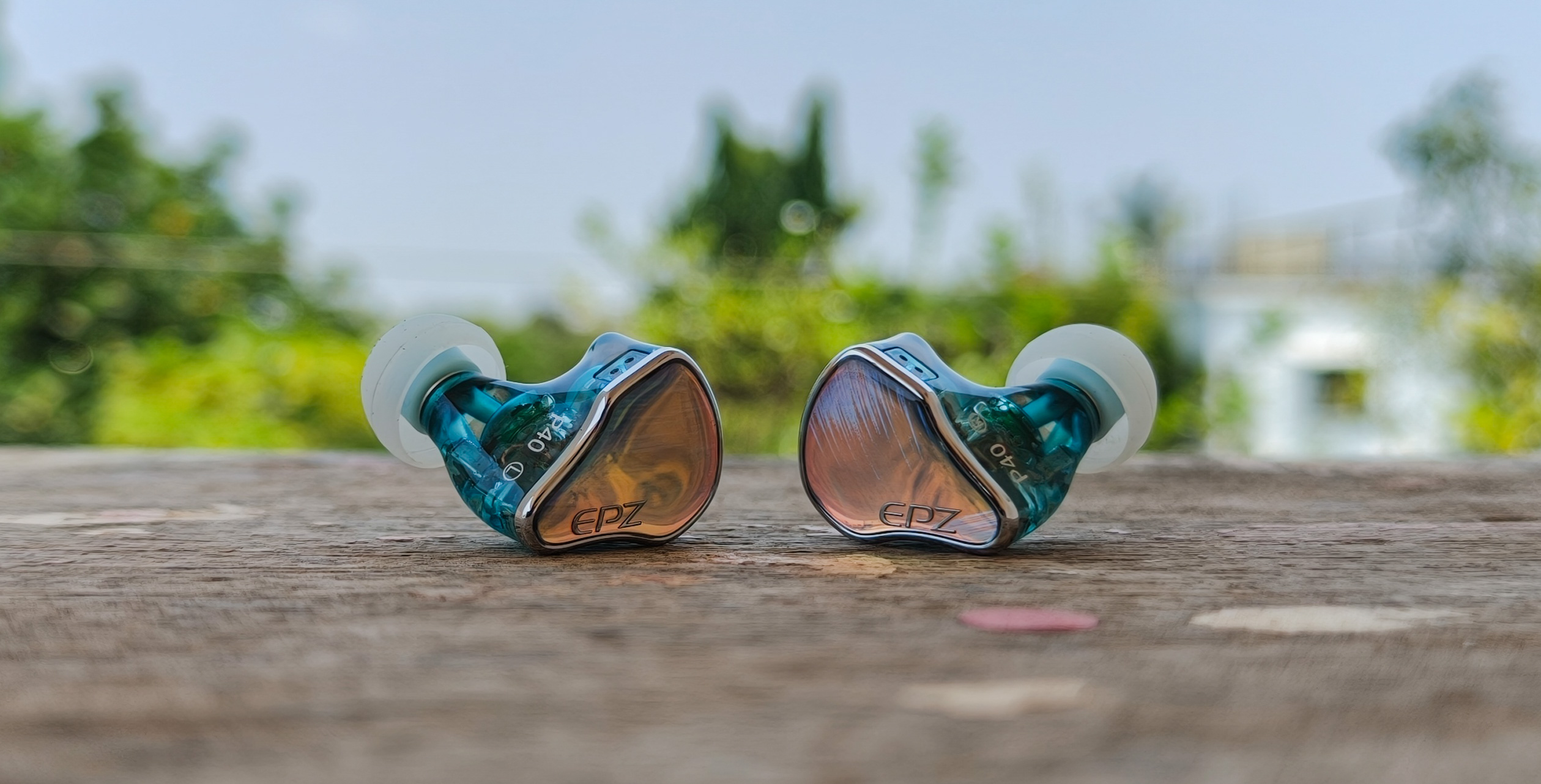
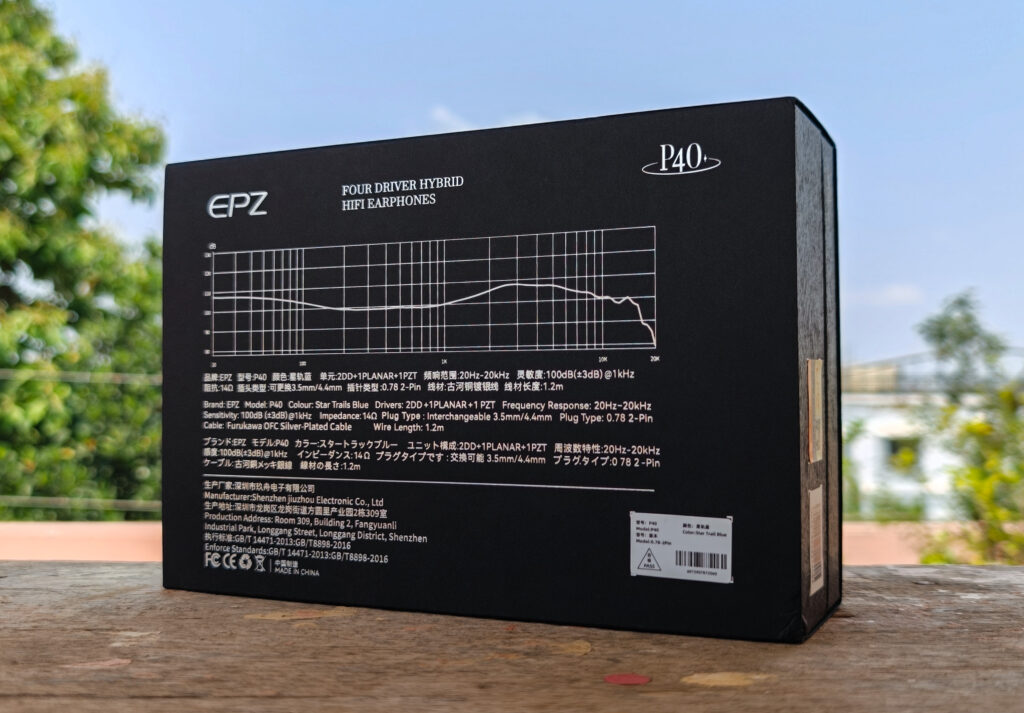
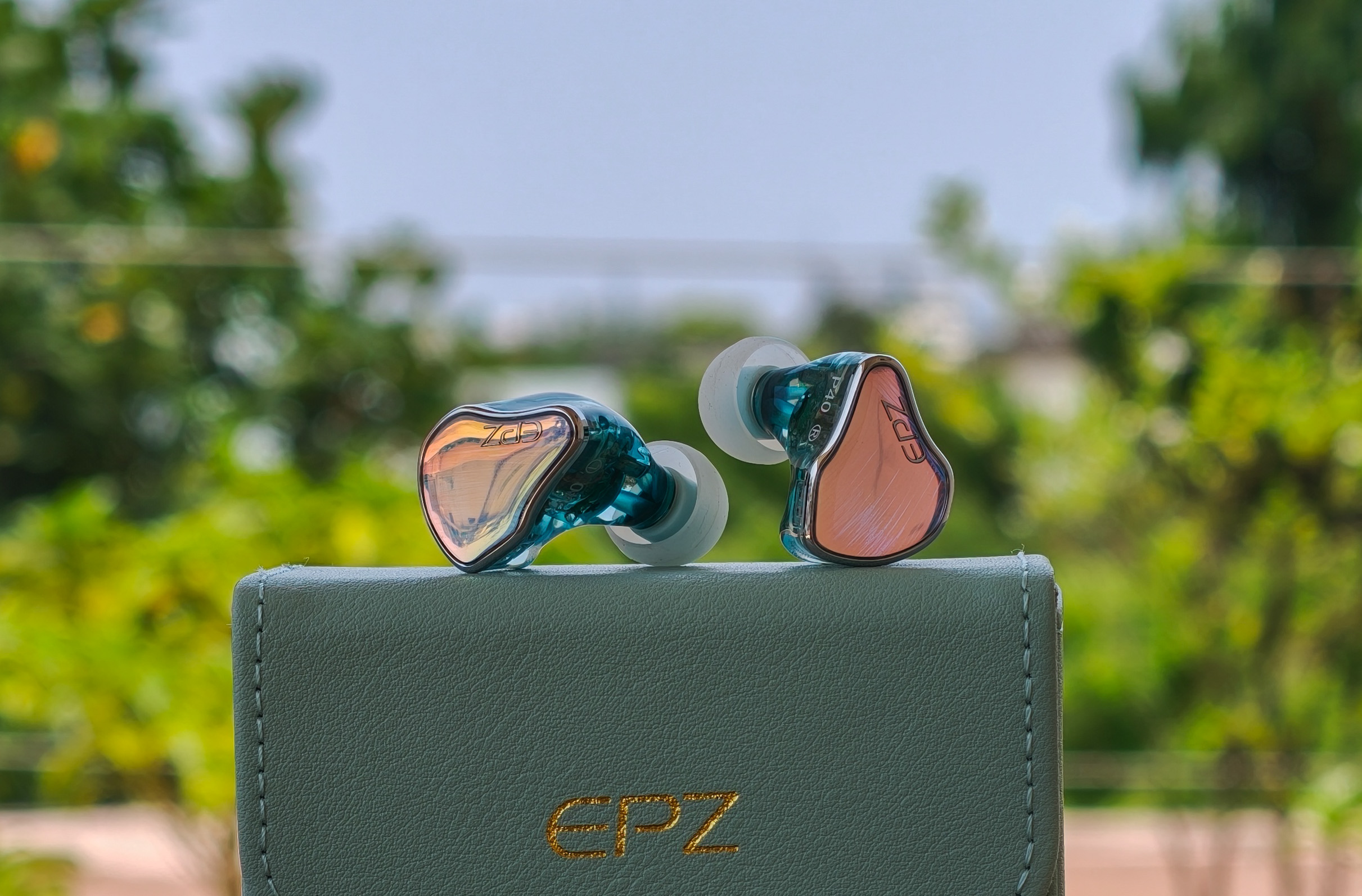
EPZ has been making some waves for a while. It is one of the newer brands that has entered into the audiophile world with a diverse portfolio. Hailing from China they already have some interesting products. Usually brands tend to enter with one set of products but EPZ has a very good range of IEMs with variety of drivers. Not only that, they have a very good line-up of USB Audio sources too. I did have a chance to listen to their TP20 pro and it was warm full and fun. Their Q5 was an interesting IEM and caught everyone’s attention because it looked like a more expensive IEM from another brand. They made a bigger wave with the P50 thanks to its more engaging presentation. What I have here with me is the P40. Subordinate to the P50 with one less but a different type of tri-brid setup. Priced at $159 it houses 2 dynamic, one micro planar and a Piezoelectric ceramic driver in each earpiece. There is only one color option, transparent blue with a opal like back plate. I will be comparing this beauty with more expensive Kefine Arnar and DUNU ITO.
I will like to thank Vicky from EPZ for this unit in exchange of my honest opinion.
Get one from here:
UNBOXING AND ACCESSORIES:
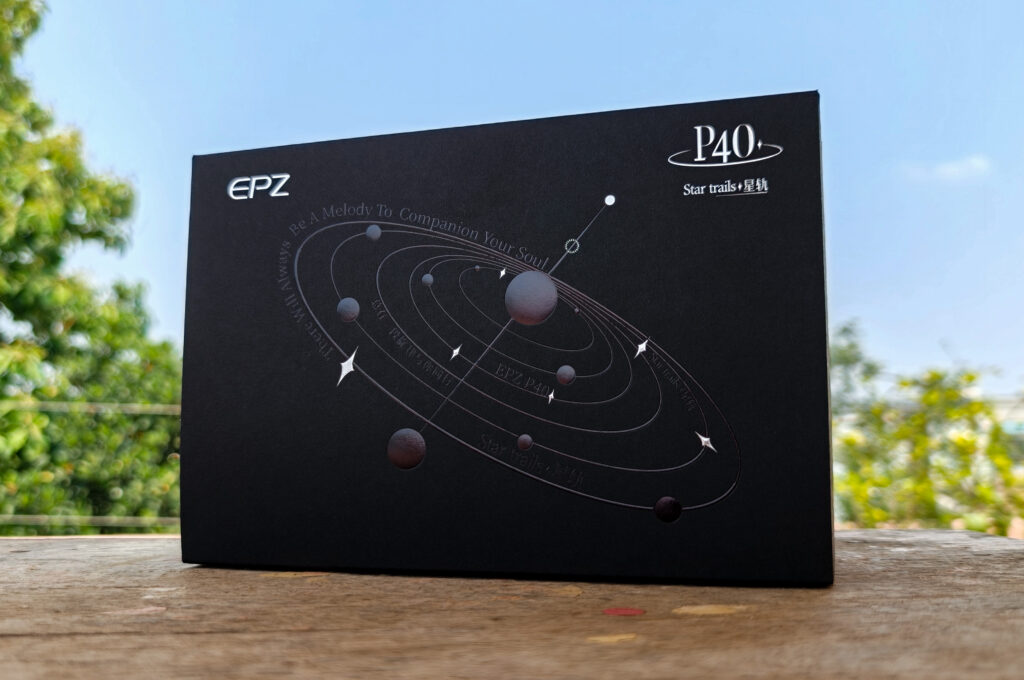
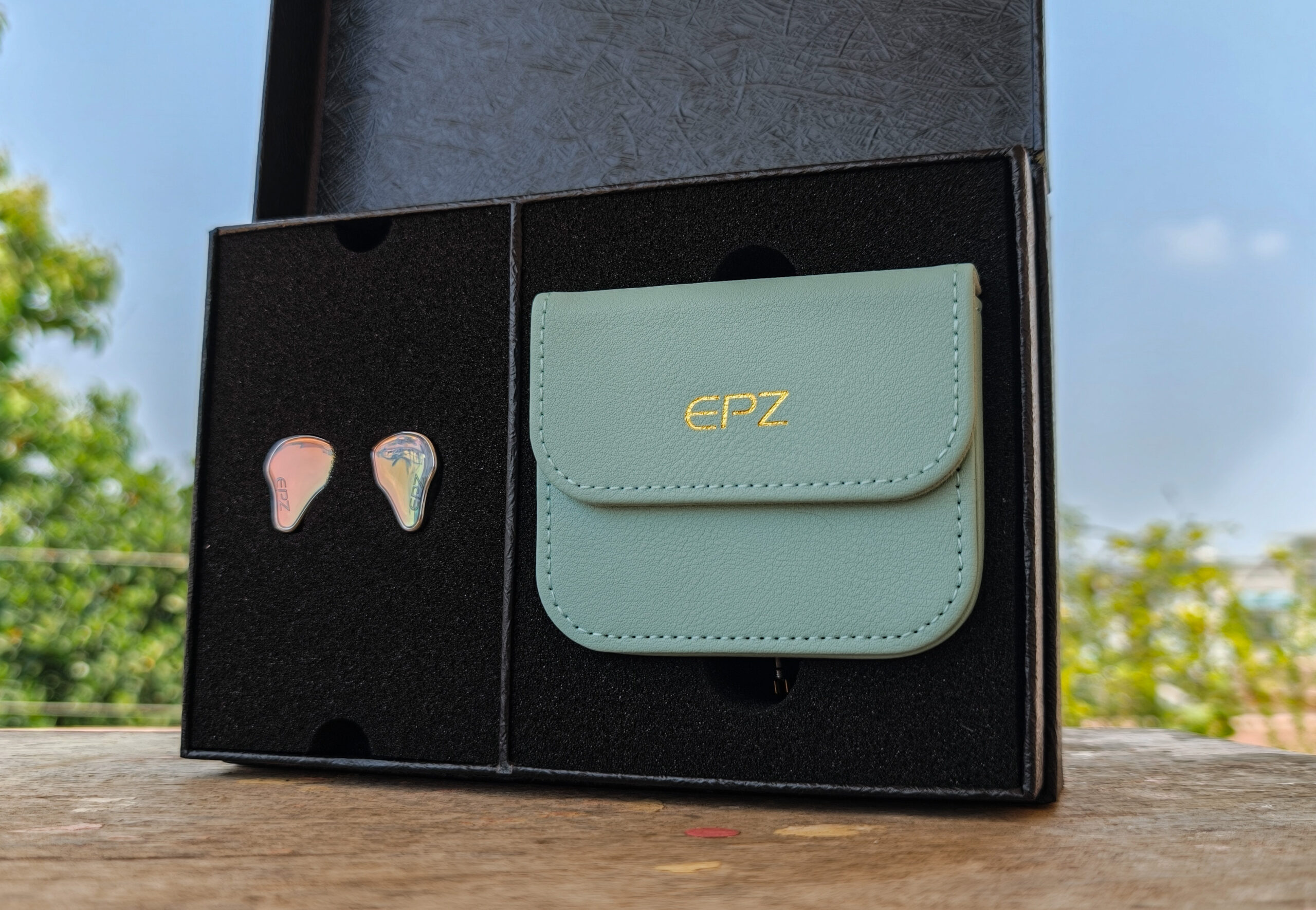
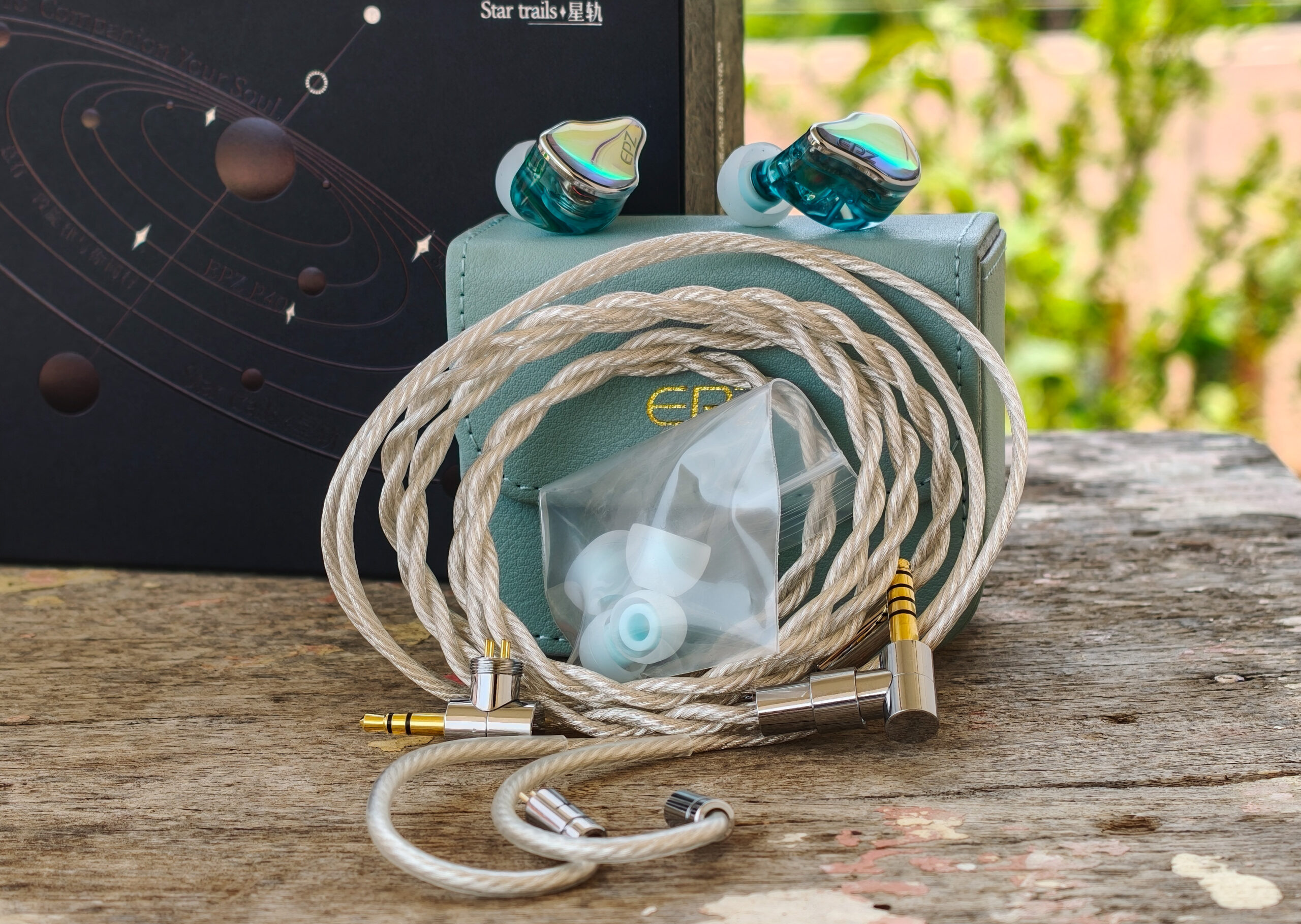
EPZ P40 ships in a kind of dull looking box. This all black box has black compression printing on it which doesn’t attract much attention. Open the book styled box and we have the earpieces and Carry case infront of us. It’s dual core modular cable is placed inside the box while a set of ear tips are placed inside in a paper box under all these. If you buy directly from EPZ, we get a set of the premium W100 tips too. I don’t think anyone needs anything more than this.
BUILD AND ERGONOMICS:
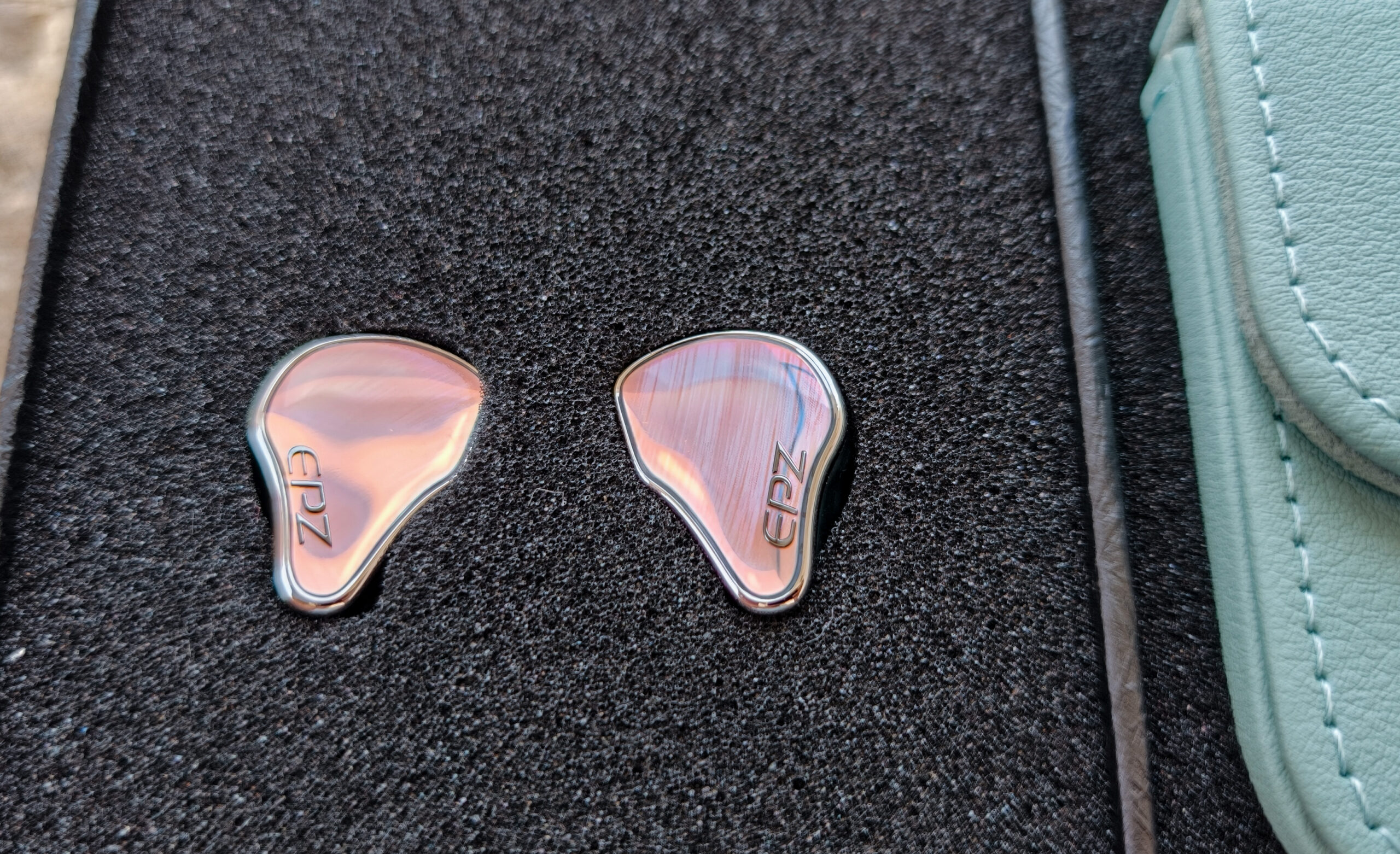
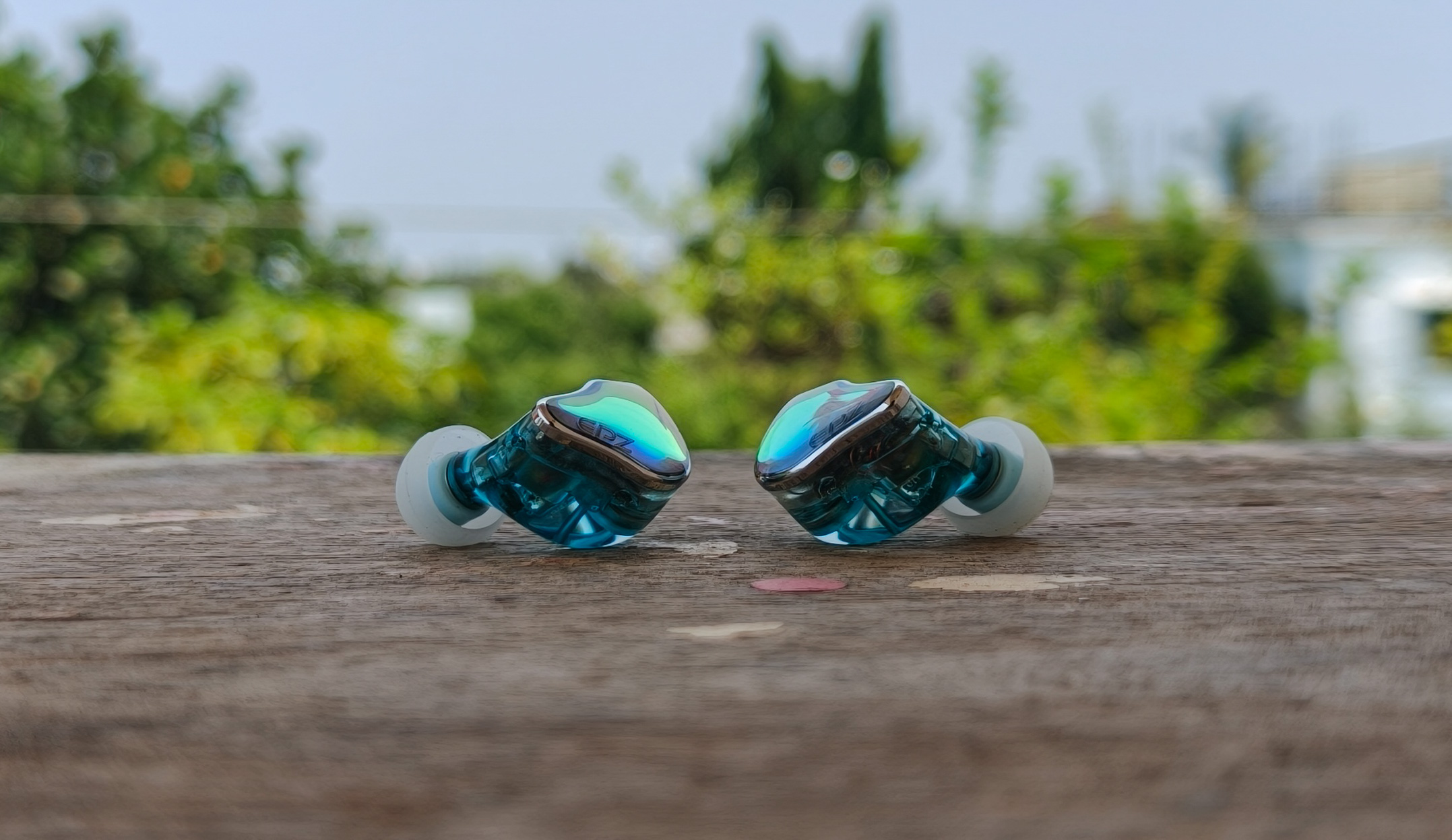
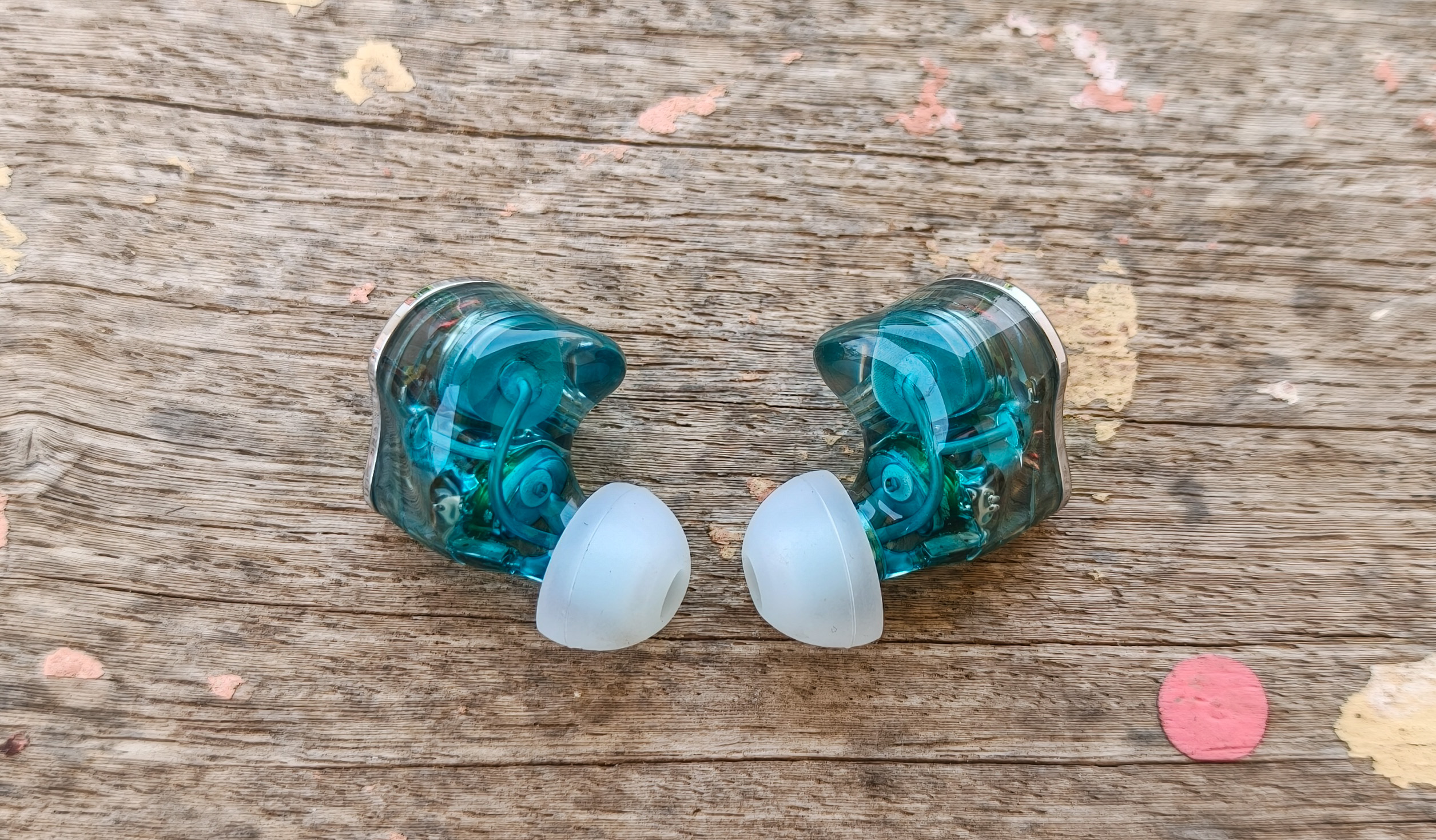
Made out of resin, P40 is easily one of the best looking IEMs under $500. Its gradient back plate demands some attention while the light blue translucent shell looks fantastic and is lightweight too. We get a semi custom like shell with a reasonable wing like structure in the inner shell. It has a small breathing vent at the cusp of the earpieces. Yes, these earpieces are a bit on the larger side but I didn’t had any issues with comfort. It had very good fit an stability inside the ears and the longer than usual nozzle helps big time.
CABLE:
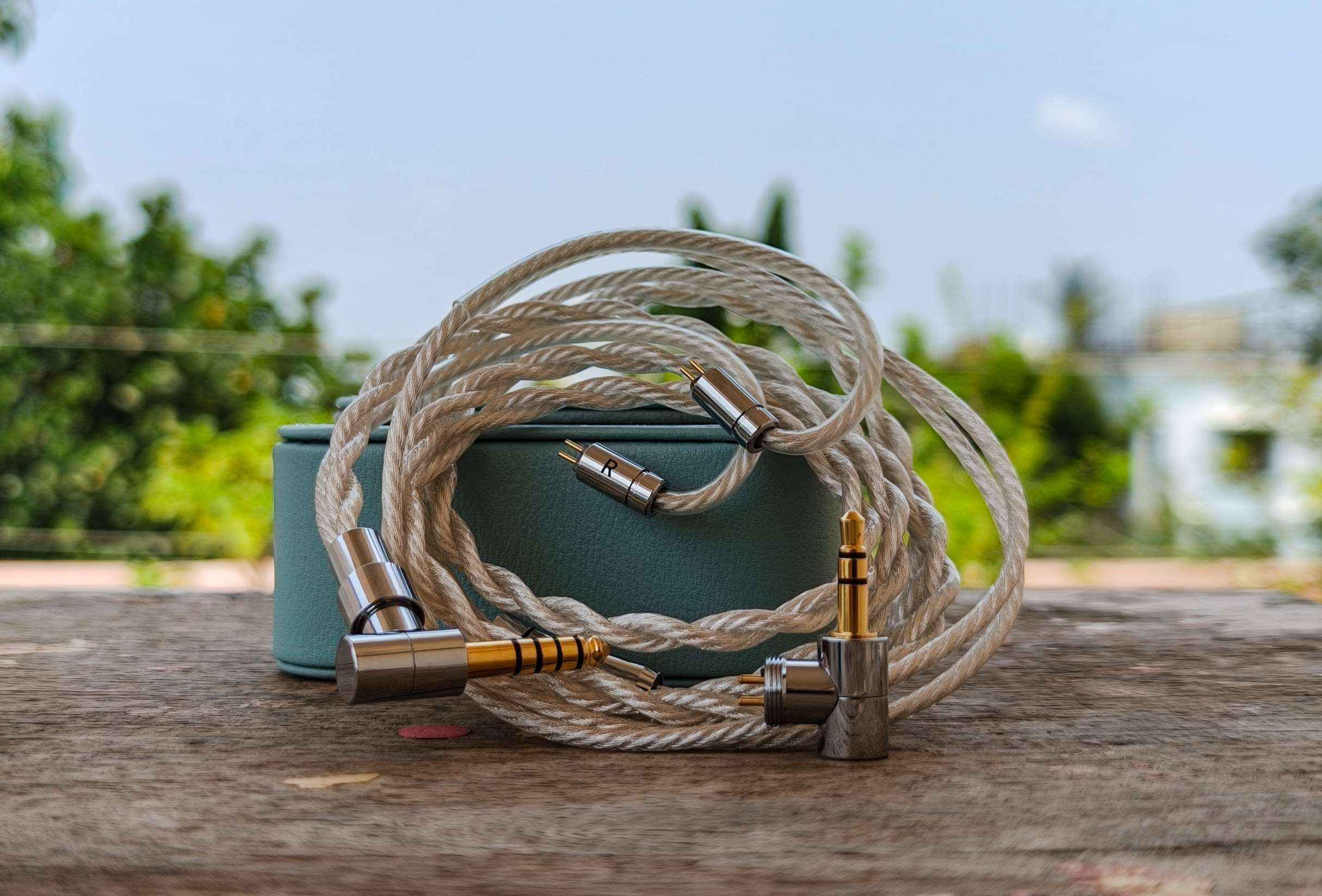
Hmm, things do get interesting here. We got a 4 core cable with the much cheaper G30 but P40 ships with a dual core cable. It uses Furukawa ofc silver plated wires. This is a bit on the stiffer side though, mostly because of the thicker cores. It retains some amount of memory but isn’t bouncy or microphonic. EPZ has used light weight parts all around the cable. The modular terminations, Y splitter, cable slider and 2pin jackets are made out of metal but are not weighing down but the cable in it’s own is on the heavier side. Because of the thicker cores, cable guides too are on the thicker and slightly more aggressive side yet aren’t causing much issues.
PAIRING WITH SOURCES:
Pairing is kind of vital for this IEM. It doesn’t need MW but it needs right kind of source to open up the stage. I was using some dongles and this sounded good but when I switched to a transport that has its own battery, P40 sounded a lot more effortless and open. If you don’t have a good source, please get a good one like Hidizs DH80s or Hip DAC 3 to enjoy the full potential of this beautiful IEM.
SOUND QUALITY:
The first thing that comes to our mind when we see dual DD drivers is, this is a bassy IEM. That’s far from the truth for P40. It has one 9mm DLC dynamic driver for the lows while the other one is a 7mm dual magnetic, dual cavity DD taking care of the mids. It’s micro planar driver is handling the highs while the PTZ ceramic driver is responsible for overall air and natural presentation and all of these come together to deliver a nicely balanced sound with a slightly W shaped signature. There is no rushed or laggy behaviour. It paces everything nicely with very good clarity across the spectrum. Unlike a lot of IEMs in this price range, there is no hiding behind under or overtones. This is a pure, true to it’s character kind of IEM. It’s neither warm, nor bright, it’s just neutral.

BASS:
P40 has a slightly W shape to it but it’s largely neutral hence it’s a more clarity and definition oriented IEM rather than being bassy or warm. It still has enough bass prowesses to show. We get good sub-bass extension and rumbles but it’s the mid bass that gives it the required amount of body and weight. It is a bit more voluminous with a fuller and meatier body. We get decent amount of air movement too with a big area of impact but most of the weight is around the centre of the note. Notes fire in while expanding in every direction. Decay feels like it’s a bit on the faster side especially because of the notes do not have much weight at the periphery but in reality it’s aptly dynamic and can hold a slower note to offer good rumbles and poise. We get very good layered delivery with nice contrast of back and foreground instruments. There are literally no issues when it comes to technical capabilities and definition. Upper bass too is one of the cleanest in this price range. P40 has one of the best lower end if you priorities clarity and definition over vigor.
MID RANGE:
Thanks to the slight bit of W shape we do get exceptional mid range emphasis and thanks to the use of DD, this mid range is definitely one of the best under $200 when it comes to naturality.
It does have a little bit of less energy at the lower mids but they still are aptly relevant and detailed. Vocals on the other hand are simply the best. I have been working on a lot of IEMs in the $100 to $400 price range and this definitely is one of the best. It’s the natural, true to the nature tonality and timbre that has won me over. It’s simply fantastic for female vocals, they enjoy excellent resolution and right amount of sharpness up top with excellent height. Male vocals are aptly thick and grunty but aren’t very poised. Both male and female vocals offer superb texture but there is one thing to keep in mind. This doesn’t have a warmish undertone and the body we get under the finishing regions of the notes is just slightly fuller. This definitely helps with clarity, transparency and resolution. Instruments too enjoy excellent resolution and definition with a little bit of less energy than the vocals. I would have liked a bit more micro details but at just $159 I am just being a bit too much greedy. Upper mids are a bit on the energetic side but doesn’t have any issues with peaks or sharpness. There are no issues with back and foreground separation either, thanks to the Z-axis depth.
HIGHS:
I have to admit, I am spoiled. I have been using some superb IEMs that offer excellent treble energy and extension and P40 is not bad at all. The best thing is, notes have good cleanliness as they maintain nice accuracy and precision. We get aptly agile and sparkly highs but the upper treble is a bit on the less energetic side and above that, it’s the lack of width and a bit of lack of definition in this region that takes a bit away from the overall experience. Or else, we get good air between instruments and very good resolution, definition and transparency with the lower and mid treble range. Layering and separation is aptly clean too. I definitely would have liked a bit more Z-axis depth but I am nit picking here.
STAGE AND IMAGING:
Staging of P40 is very good. I was expecting class leading expansion but this is just shy of that. We get very good height and width with nice Z-axis depth. It doesn’t have much frontal projection but the instruments wrap around the back of the head. Most of the instruments beyond the vocals are placed out of the head while the bass and vocals are present inside the head. Imaging and cue placements are very accurate with nice directional projections. Sonics too are fantastic with very good transient effects but they could have been a bit more cohesive if the background notes were a bit more subtle.
COMPARISONS:
VS Dunu ITO :
ITO has same number of drivers but comes with a different type of tuning and one of the reasons why I was unable to give P40 full marks.
ITO is not close to the technical capabilities or accuracy and precision of this P40 but this IEM sounds a lot more effortless. It has a warmer undertone that offers good body under precise finishing definitions. It has fuller meatier bass notes with better dynamics and air movement. Its mid range and highs are on the smoother side but it offers a more even energy with the upper treble. Vocals too sound more organic and emotional.
Is ITO better that P40? No, definitely not but P40 could have had better, uniform energy at the upper treble region. That’s the only thing it needed to get top recommendation from me, under $200.
VS Kefine Arnar:
This is the best IEM I have heard under $200. You can feel free to ask, why I am torturing this highly capable IEMs with my favorite IEMs? Let tell you, I love the P40 too but you guys need to keep the differently tuned, equally impressive alternates in mind too.
This is a warmer IEM, again, up till the upper mids. Bass js slightly slower, has bigger body, bigger area and weight behind the notes while offering less clarity and precision but better texture and air behind the notes. Mids again are more emotional and organic with Arnar. And, Arnar offers a warmer undertone too. Interestingly, P40 has better cleanliness and definition but the Arnar pulls one back by offering a more even and agile treble range. It has better upper treble clarity. Stage too is one of the biggest under $200.
CONCLUSION:
P40 is just shy of excellence. It’s superb with accuracy and precision with the mids while the lower end is clean, clear yet aptly engaging but I would have liked a bit more treble clarity and definition to give it class leading recommendation. Yet it’s still is one of the best IEMs to get under $200. Don’t buy it expecting a very musical or warm kind of signature because this is barely warm or smooth anywhere.
This is easily one of the best looking IEMs in this price range and gets my recommendation for an engaging yet clarity oriented presentation.