


Page 1: Introduction, Unboxing and Accessories, Build and Design, Physical Controls, Battery Life
Page 2: Connectivity and Storage, Wireless Audio, GUI and Presentation, Navigation
Page 3: Sound Impressions and Power
Page 4: Select Comparisons, Verdict
Sound Impressions
The Lotoo Mjolnir is one of the most transparent and resolving portable sources I’ve ever heard. Through cleanliness in conversion, amplification and output, it creates the blankest of canvases. Its background darkness is absolutely peerless to my ears. Any space not taken up by a note is dead silent. And, the instruments it renders are rich in both surface-level clarity and substantive resolution. Notes not only look sharp, textured and hi-res, but each and every one are bolstered by a tangible sense of body – a physicality – that makes them feel weighted and tactile within the Mjolnir’s immense, holographic space. It positions notes slightly upfront, so it isn’t for those who want their music distant and their soundscapes concave. It won’t trick you into thinking you’re in a concert hall, unless that’s how the track was recorded and produced. However, the detail with which the Mjolnir defines its space, means you’re able to see past those notes to the very ends of the stage. So, even with the device’s inch-closer notes, you’ll hear no hindrances whatsoever in the Mjolnir’s ability to deliver huge, holographic, detailed and dead-quiet soundscapes.

In tone and timbre, as cliche as this is, I struggle to come up with anything besides pure. There’s a bare quality to the Mjolnir’s reproduction, almost as if tracks were stripped down to their stems (or their unedited, singular parts). Elements that were close-knit and bound by reverb – or simply overlapped – on other sources are suddenly distinct and far apart. Then, traces of fat and smoke warmer sources may have introduced are no longer there. That might be seen as a con to some people. I wouldn’t call the Mjolnir sterile, but it’s close enough that I can see others thinking so. It might also lack the bombastic fun others may want from their sources. The Mjolnir doesn’t really get bouncy or colorful unless the track (or any piece of gear downstream) introduces that. Even though it is capable of big dynamic swings, it is only as hyped or relaxed as the track it’s playing. So, it’s important to be aware that the Mjolnir’s technical feats come with a decidedly disciplined nature. But, if you don’t mind that, or, better yet, prefer it, you will be rewarded with – more often that not – greater insight into your records than you’ve ever heard before.
That disciplined nature is perhaps most evident in the low-end. The Mjolnir is not a source that senselessly slams, nor does it seek to show off how much it can rattle the human cranium. The main MO here is to deliver as much bass information as possible in a way that remains true to its pristine tone. The result is lows that are even and move in unison across their entire stretch. There isn’t more verve than slam, more rumble than boom or vice-versa. Where other sources might put one above the other, the Mjolnir sits them all on an even playing field to let each part shine as much as possible. And, again, once you add the Mjolnir’s pitch-black backdrop, which lets even the darkest of notes cut cleanly through, as well as its stellar resolution, there’s barely anything this thing can’t reveal. Don’t mistake its calmness for weakness too. Superb extension gives way to heaps of power and depth – an ease, even at the lowest, most subdermal octaves – when the track or chain calls for it.
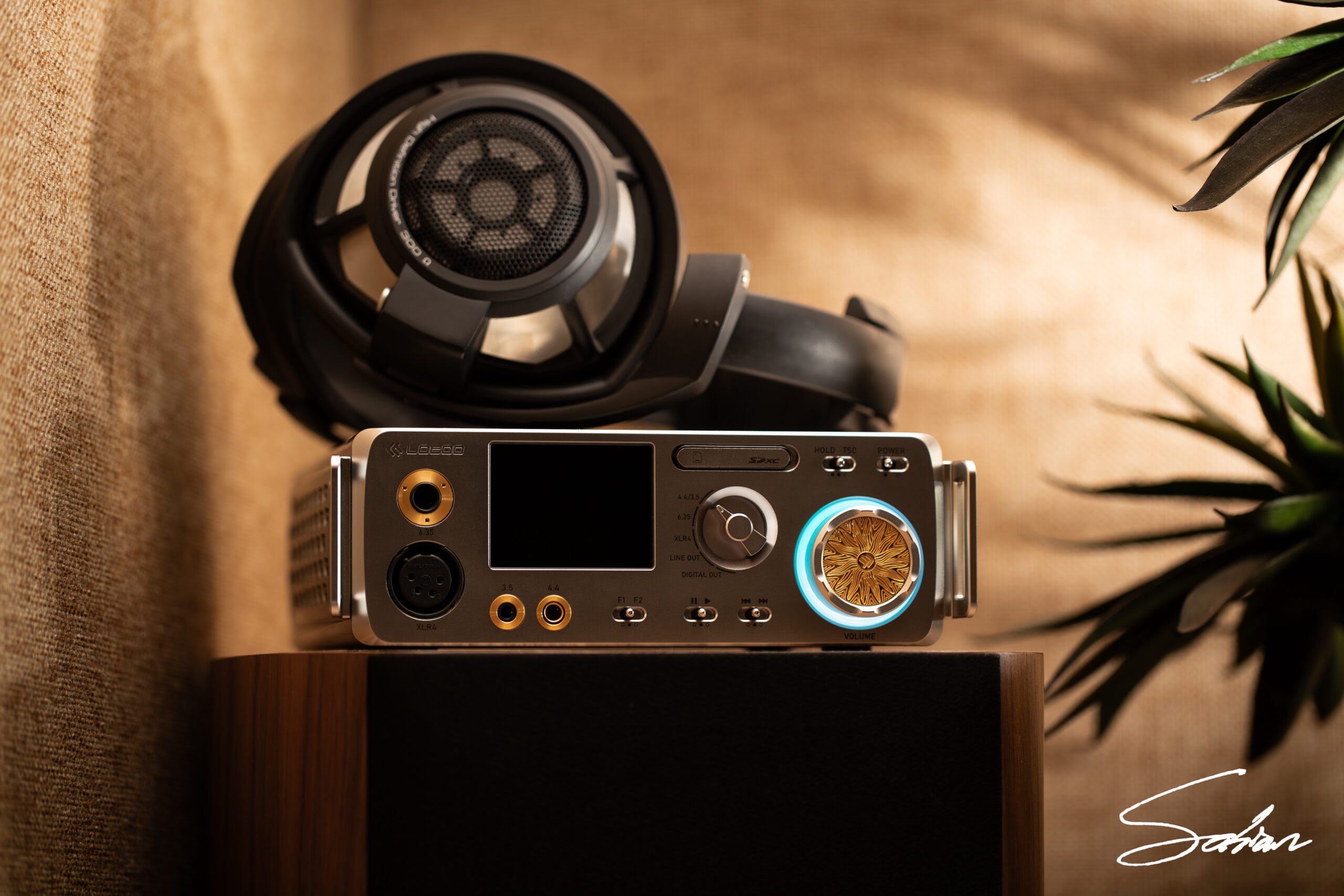
My bass reference, for example, is Daft Punk’s Game of Love. Though the Mjolnir doesn’t make those kick drums thwack quite as hard as some other sources, you’ll swear you could feel those synthesized bass lines down the back of your throat. Similarly, on J-Rod Sullivan’s Ripple Effect, it won’t force or push forward the syncopated, unison thumps just before the start of every bar. It simply resolves all the information it needs to be there – from the very bottom of the sub-bass, to every bit of texture in the mid-bass – and lets the gear upstream decide what to do with it; deliver it evenly, in the case of my Aroma Audio Fei Wan, or elevate the mid-bass a smidge, in the case of my Dan Clark Audio ETHER 2, etc. The Mjolnir’s bass truly is as multifaceted as the rest of its FR, delivering heaps of texture and depth, due in large part to its extension and its transparency. However, also know that its lows are inherently set to neutral; measured, even-handed. So, if it’s boisterousness and explosiveness you’re after, you’ll have to either coax it out, or explore other options altogether.
If there’s any color to be found at all in the Mjolnir, it’ll be in the midrange. Again, instruments are positioned ever-so-slightly closer to you. So, while the device won’t show any lower-mid bloat or high-mid saturation, you will notice persistent qualities like slightly larger notes and slightly more space behind instruments than in front of them, hence that closer feel. The biggest compliment I can pay the Mjolnir’s midrange is it’s been allowed to remain complete – intact – because of the device’s technical chops. Usually, you’d see midranges scooped for contrast, or dulled down for space. But, because the Mjolnir’s already rich in both simply by nailing the fundamentals, there isn’t any need for it to compromise its midrange. Vocals and instruments alike are well-rounded, full in tone, yet surrounded by clean, unused headroom, which only aids the device’s realism. If I were to nitpick, I’d probably say that, again, this midrange doesn’t really have any alluring colors or flavors. It’s not for listeners looking for that R2R bloom, or that tube-y glow. Otherwise, this is simply a midrange that reveals, reveals and reveals, all whilst remaining fully uncompromised; a unique feat necessary to put the Mjolnir clearly above your “average” source.

With resolution and transparency being its strongest suits, it’s no surprise that I find the Mjolnir’s treble its greatest asset. Compared to other sources, there’s just a unique tightness and focus to the source’s attack, as if it’s refined every transient to its purest, finest point, whilst getting rid of any unneeded tizz along the way. This is particularly evident with IEMs that can get a bit splashy in the low-treble, like the JH Audio Layla, Empire Ears Phantom or Tahsin Sevgel Audio Devices Model2. I’ve tested those in-ears with tracks I know have hotter sibilants, and I’ve been shocked to find those winces near-fully disappear on the Mjolnir. The device isn’t rolling-off the low-treble, because I’m not hearing diffuseness of any kind. Once again, it’s more like the peaks have been pared down, like how a freshly-sharpened blade cuts effortlessly and leaves no jagged edges. It maintains that distilled, focused quality all throughout the mid- and upper-trebles. Ever since the LPGT, Lotoo have been a brand I’ve recognized for their lack of top-end glare, and I’m elated to see them achieve that once again here.
In addition to smoothness, this sharp refinement is a big contributor to the Mjolnir’s backdrop as well. Transients come and go so cleanly that they leave no lingering shimmers or tizzes around them. It’s like how an OLED screen’s quicker response times reduce motion blur, so movements look sharper. It’s one part of the Mjolnir’s transparency, with another being air. Its extended – but not emphasized – high-highs generate a massive amount of space for instruments to pop in and decay. They breathe and resonate with ease. And, despite its slightly-pushed positioning, again, the Mjolnir convincingly creates space behind instruments to bolster its holography. And, last in the technical trifecta is clarity. There’s just an absurd amount of surface detail in each and every note, defined with some of the finest granularity you’ll find short of high-end desktop gear.
PMEQ
Short for ParaMetric EQualizer, it’s exactly what it says on the tin. It allows you to shape the Mjolnir’s FR according to your needs. Unfortunately, the Mjolnir doesn’t have the full PMEQ app, which allows you to create custom curves. All you have here are the pre-made presets, which seem to be the same ones found in their more recent players:

Here’s a brief summary of what each preset sounds like to my ears:
Classic: A midrange (mostly upper) and low-treble scoop that results in a slightly muffled, muted sound.
Pop: Center-mid (and perhaps a bit of lower-mid) elevation that results in a fuller, chestier, more saturated tone, particularly useful to beef up thinner vocals or lead instruments.
Rock: Strong peaks in the sub-bass and low-treble (around 5-6kHz), creating an articulate v-shape.
Techno: Elevations in the sub- and mid-bass, as well as the mid-treble for a u-shape that’s a bit softer on the ear, but just as impactful as Rock.
Dance: Mostly just a big mid-bass boost for sheer thump.
Headphone: Frankly, this one almost sounds like a pure volume boost. Everything is louder and in-your-face. Perhaps, it’s a W-shaped curve that’s boosting some part of the lows, mids and highs in equal measure, but for all intents and purposes, it simply sounds louder.
Jazz: A huge sub-bass boost, fuller low-mids, muted upper-mids and a smoothened low-treble.
Full Bass: Self-explanatory. It’s like you’re listening underwater.
So, as you can probably see, the presets are somewhat of a mixed bag as far as how their names and modifications correlate. There are some that seem to shape the sound in ways that appeal to the genre, like the bass boosts for Dance and Techno. However, there are also ones like Jazz, which seemingly aim to fight against the tonal characteristics that are inherent in that genre. Personally, I think the changes these presets make are a bit too drastic for them to be used consistently. I’d be more excited to see full PMEQ functionality simply return.
ATE
ATE (or Acoustic Timbre Embellisher) is another tone shaper introduced in the PAW Gold Touch. Again, the presets seem to have remained unchanged since then, and it’s certainly a much subtler augment than PMEQ.
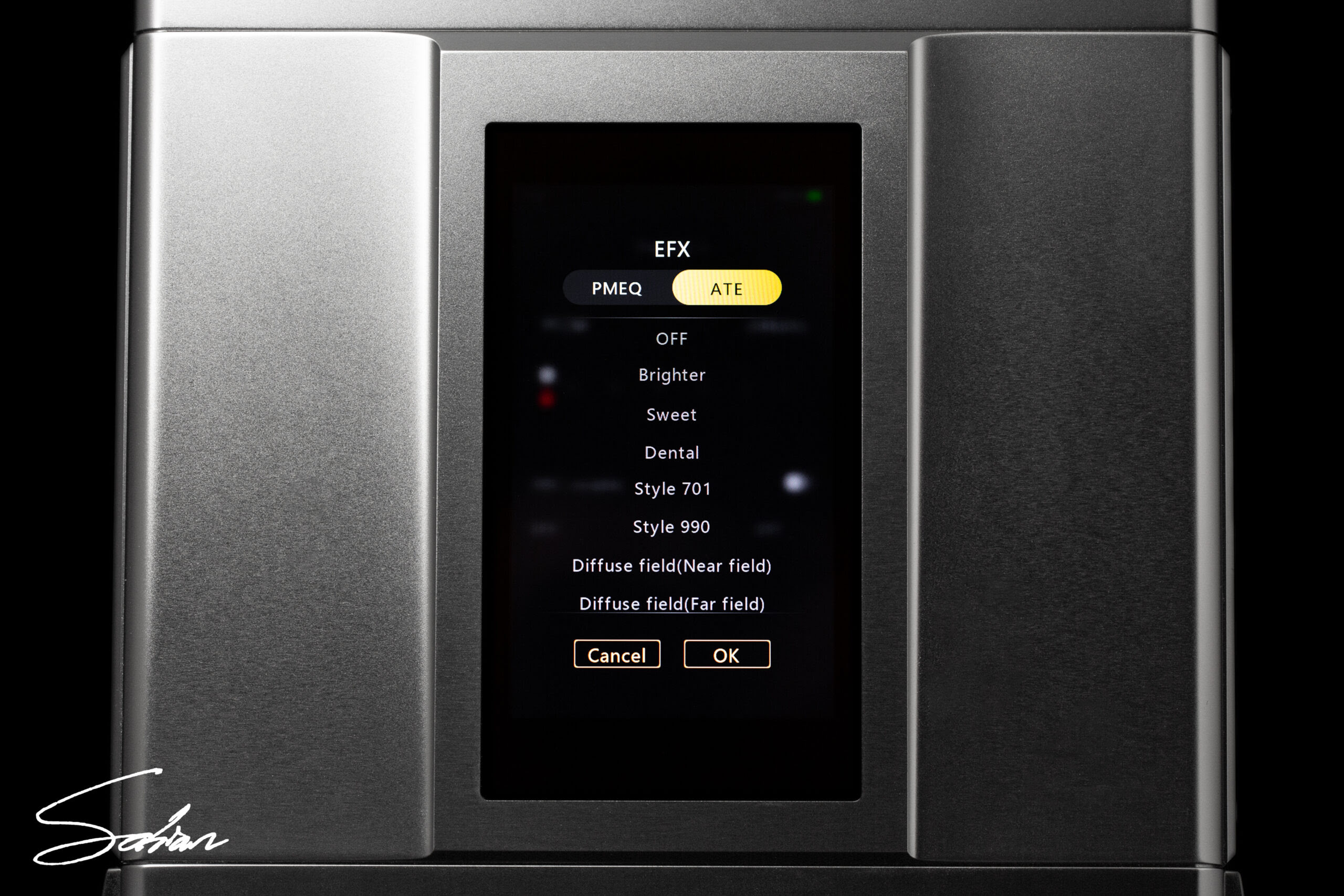
Again, here’s a brief summary of what each preset sounds like to my ears:
Brighter: A mid-bass attenuator and a treble (particularly low-treble) additive for a cleaner, more articulate sound.
Sweet: Seemingly, a cut in the centre-to-upper-mid frequencies that tightens vocals, takes away those brassy, mouthy, projecting tones and results in a more muted, laidback sound.
Dental: Adds a richness to the lower-mids that gives instruments a lusher, earthier, full-blooded tone. Female vocalists are huskier and deeper in timbre.
Style 701: Presumably, an AKG K701 emulator. Shelves the lower-half of the FR down significantly, resulting in a dry, papery tone.
Style 990: Presumably, a Beyerdynamic DT990 emulator, resulting in an admittedly nice-sounding v-shape. It’s probably my favorite preset thus far.
Diffuse field (near-field): The soundstage is seemingly pulled towards you, then wrapped around your head. It’s an inside-out sound reminiscent of phasing, which may prove useful in niche cases like mixing choirs, where you want everything in a level plane right in front of you, rather than in the traditional, surround sound way.
Diffuse field (far-field): A far more artificial-sounding preset. It’s not dissimilar from cross-feed, resulting in a center-image that blurs into the left and right channels. However, it isn’t particularly more expansive, nor do sounds seem further away.
Power
As a brief refresher of what we covered in page 1, the Mjolnir’s max power output is:
- 3.5mm/6.35mm (SE): 1.2W @ 32Ω
- 4-pin XLR/4.4mm (BAL): 2.5W @ 32Ω
And, it has 4 gain stages (which apply to both its headphone outputs and its line outputs): Low, Middle, High and Super High. It’s worth noting that the Mjolnir won’t automatically compensate for volume when you switch gain stages. So, be careful whenever you’re stepping up in gain, so you don’t blow your ears out.
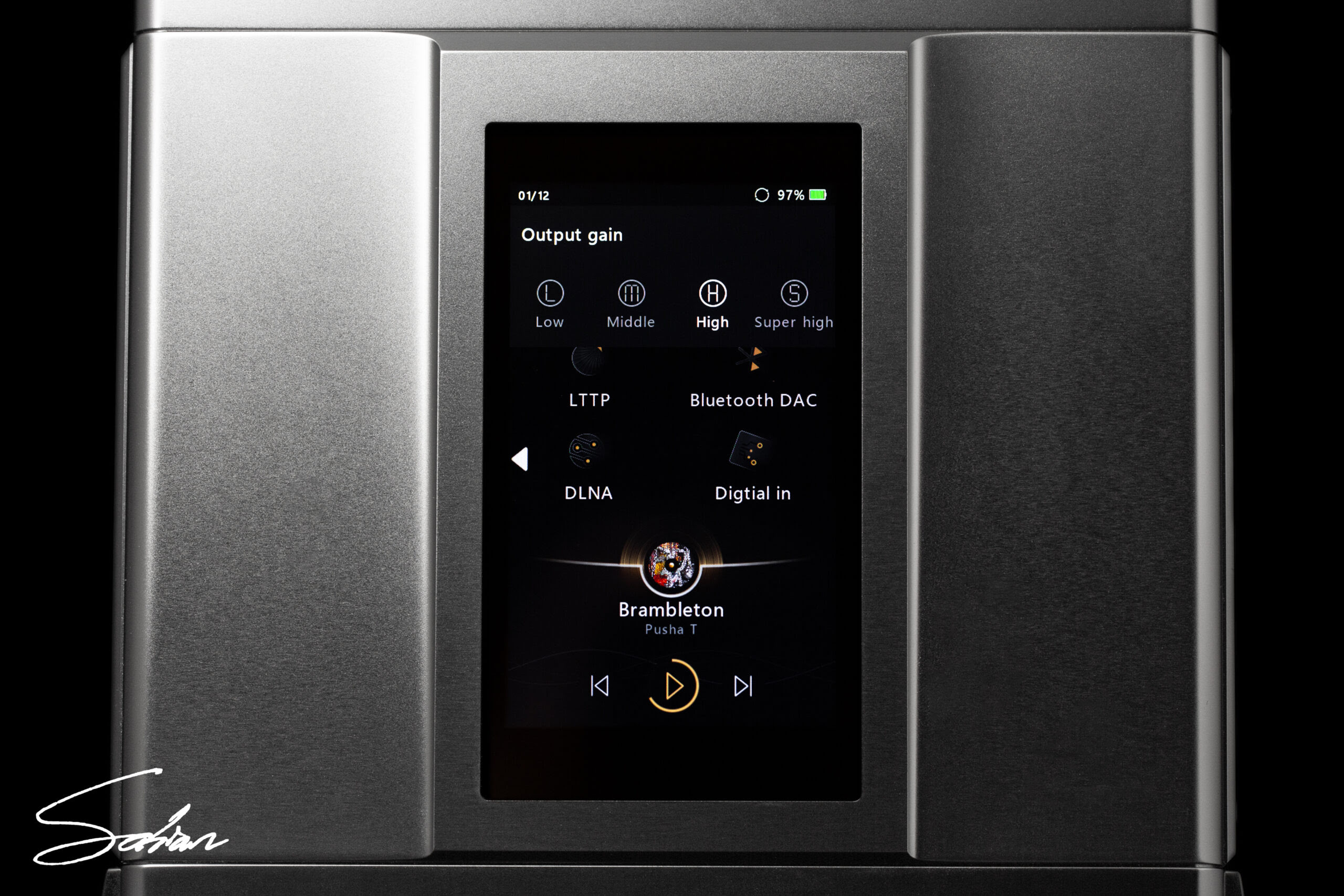
Also, whenever you switch gain stages, it doesn’t change exactly when you press the button. It changes the next time you hit Play. Then, the relays click into place, the headphone output blips for a split-second, and you’re in the new gain stage. The issue here is, for that split-second, the Mjolnir will play the track in the gain stage it was just in. So, say you’re in Super High, and now you’ve plugged in a pair of sensitive IEMs, so you switch to Low. As soon as you hit Play, there will be a split second where the song plays in Super High into your sensitive IEMs, which is not something your ears will like (your IEMs will likely be fine, though. Drivers can easily output far louder than our ears can handle). So, I’d suggest hitting Play and letting the amp switch stages before you plug your IEMs in. But, far more ideally, Lotoo fixes this in a future firmware update.
Now that all that’s out of the way, let’s talk about sonics.
The Mjolnir is a device that impresses on both ends of the spectrum. Easier-to-drive IEMs like the Aroma Audio Fei Wan unearth no hiss whatsoever on Low and Mid gain, and only the tiniest bit coming through at High and Super High; completely inaudible with music on. Super-sensitive hiss hounds like the Empire Ears Phantom do pick up hiss even on Low. But, the fact that it gets less noise here than some portable DAPs I’ve tried in the past should be a testament to just how clean the Mjolnir’s amplification is.
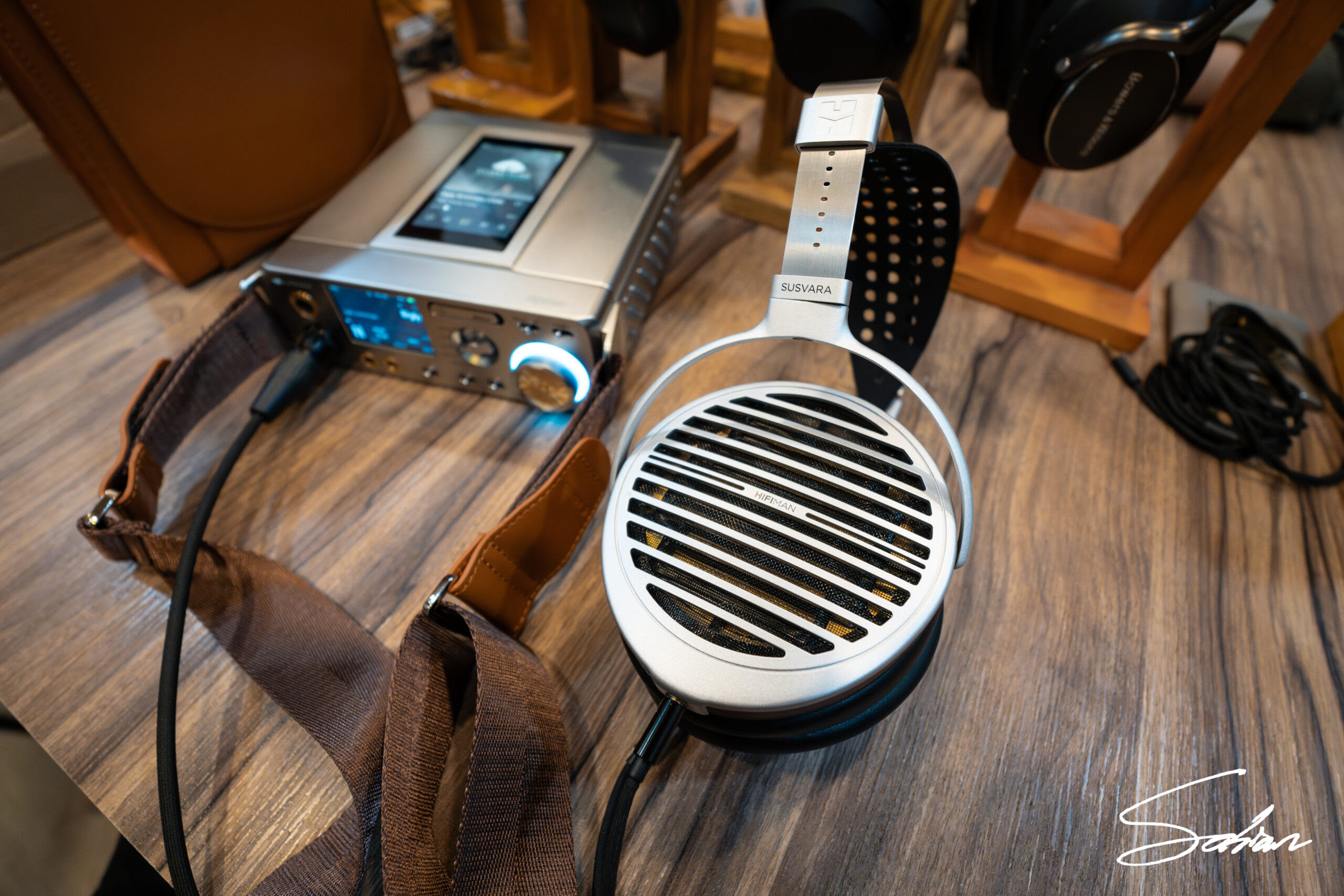
On the opposite end, the Mjolnir is no slouch when it comes to driving demanding headphones. Cans like the Sennheiser HD800S, ZMF Caldera and even HIFIMAN’s Susvara were all driven well out of the Mjolnir, requiring just 45-50 steps (and 55-60 for the Susvara) of the available 100 on Super High gain to get pretty loud. Sonically, is it powerful enough to erase the need for a dedicated headphone amp? I would say no. Comparing it head-to-head with a massive amp like the Cen.grand Silver Fox, I definitely heard a wider stage, more elegant, refined transients and superior bass weight out of all three headphones. Remember, though, that what I’m describing is the Silver Fox fed by the Mjolnir. If it was fed by a lesser DAC, the gap wouldn’t be as large. So, although the Mjolnir won’t single-handedly supplant entire desktop rigs anytime soon, it does take a lot to beat it. Or, if you can splash the cash, it can even find its place within your chain.



One Response
What’s up with randomly bold fonts? Makes no sense