


Page 1: Introduction, Unboxing and Accessories, Build and Design, Physical Controls, Battery Life
Page 2: Connectivity and Storage, Wireless Audio, GUI and Presentation, Navigation
Page 3: Sound Impressions and Power
Page 4: Select Comparisons, Verdict
Select Comparisons
Chord Hugo 2
The Mjolnir and Hugo 2 aren’t worlds apart in tonality or presentation. Both straddle neutrality, and both are known for being technically capable. But, the Mjolnir audibly edges the Hugo in the latter. Its stage is wider and deeper by inches, but what really sets it apart is its unprecedentedly black background. Again, anything outside of the music is absolute silence, and the Hugo 2 lags just behind in that department; both in terms of dynamics and in literal noise. I get a little hiss off the Hugo on my Aroma Audio Fei Wan, while the Mjolnir is noise-free. In layering and resolution, the Mjolnir is also just that bit tidier and cleaner. Notes pop in and out with less blur, and they’re less bunched-up than on the Hugo 2. Are they miles apart in performance? I wouldn’t say so. I’d be fine with either. But, there’s no question that the Mjolnir is the stronger technician of the two.
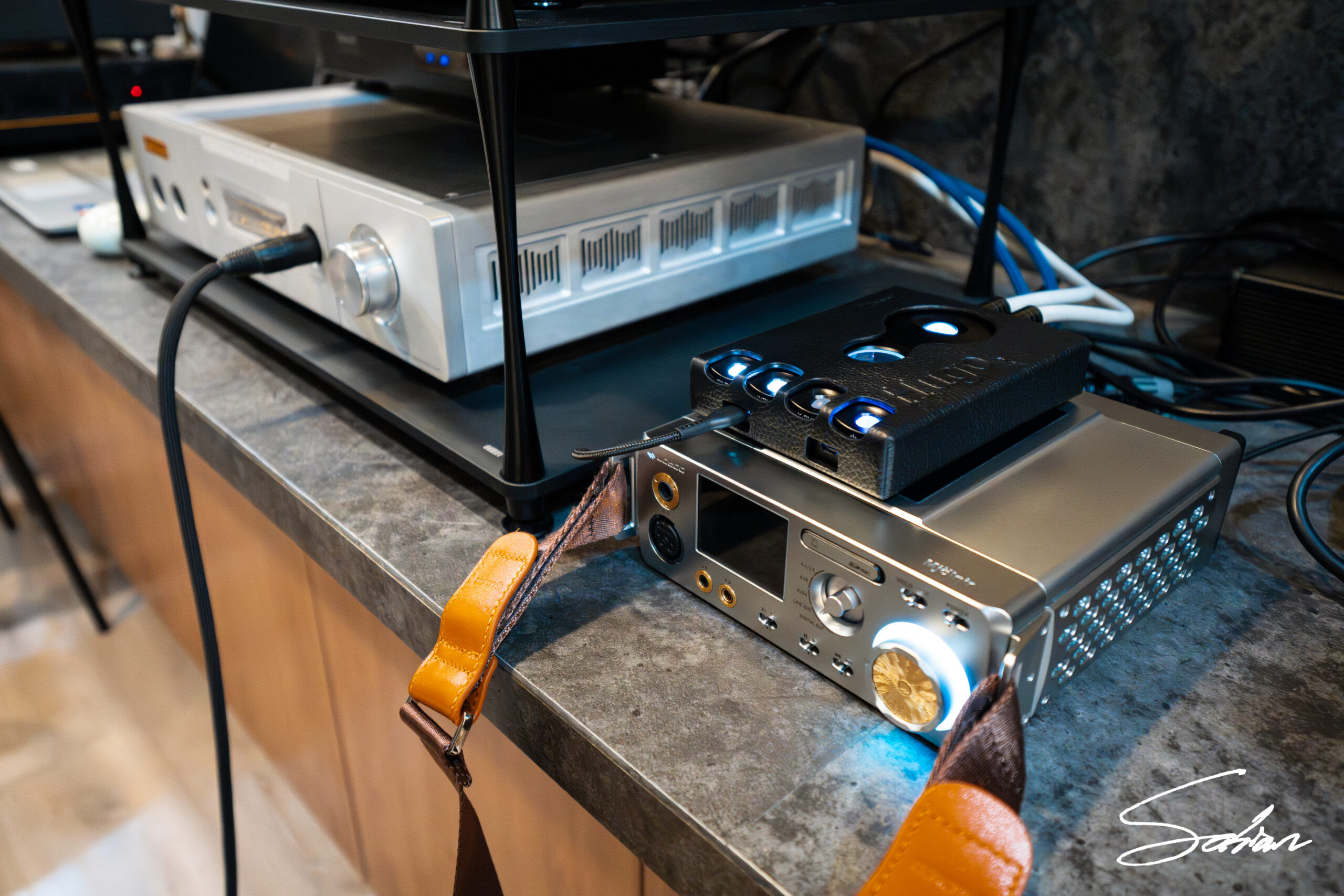
Tonally, while the Hugo 2’s been described as cold or sterile in the past, I actually find it to have a tad more forwardness than the Mjolnir, particularly in the mid-bass and centre-mids. The latter, by comparison, is even more relaxed, hands-off and open-sounding. So, if you found the Hugo 2 overtly lean or distant, the Mjolnir is likely not for you either. That said, the Lotoo DAP also isn’t as hard-edged as the Hugo 2. Its transients are smoother and more refined, versus the Hugo 2’s almost-cutting, biting sorta delivery. So, if you’re okay with the Hugo’s tonal balance, but wish it was gentler on the transient (especially in the treble), the Mjolnir could be the solution (at its hefty price, of course).
Purely As DACs
Courtesy of my local dealer, Beyond the Music, I was able to compare the Mjolnir and Hugo 2, as DACs, feeding the Cen.grand 9i-906 Silver Fox headphone amp; both via RCA input. First and foremost, the Mjolnir’s line output is louder than the Hugo 2’s by 7-8dB through that amp. Although that isn’t a likely concern for people using a standalone amp anyway, I hope it can at least contextualize the Mjolnir’s power to the thousands of audiophiles out there who have the Hugo 2 as their desktop DAC.
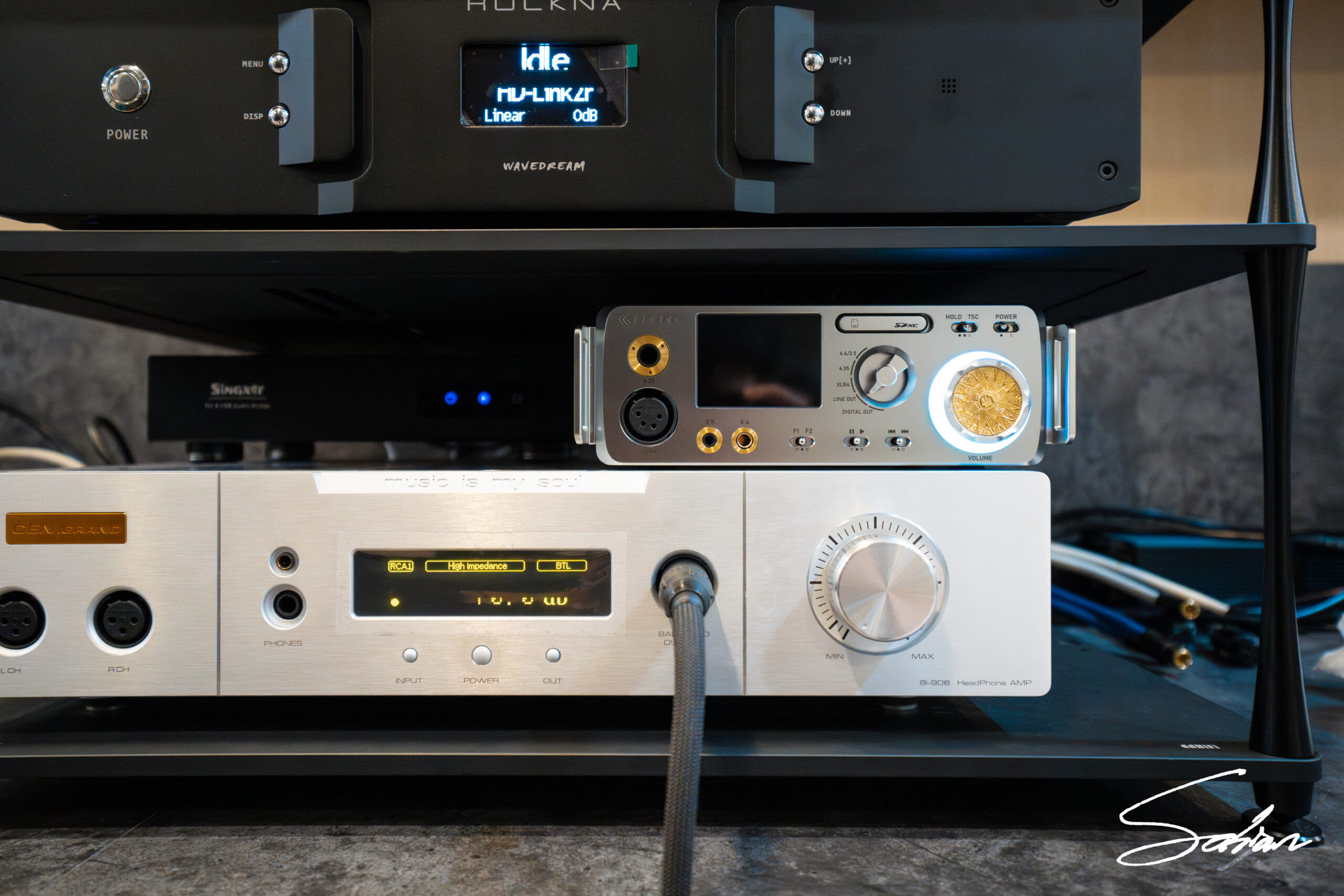
Through the Silver Fox amp, I heard a lot of the same differences I heard when comparing the Mjolnir and Hugo 2’s headphone outputs. Speaking broadly, the Mjolnir’s feed is notably tidier; cleaner. Notes are better organized, they’re stood against a darker, deeper background, there’s more and cleaner air between them, and you get a more even, disciplined tonality. The Hugo 2 persists with its mid-bass and centre-mid lift over the Mjolnir, as well as its harder-edged, more biting treble. And, again, the Hugo’s feed is a smidge messier and intimate by comparison. On the Silver Fox, I also noticed the Mjolnir and Hugo having similar instrument forwardness; both a tad more upfront than neutral. But, you could see more depth behind them on the Mjolnir, which lets background sounds like, say, the synth lines on Snarky Puppy’s Pineapple to come clearer through.
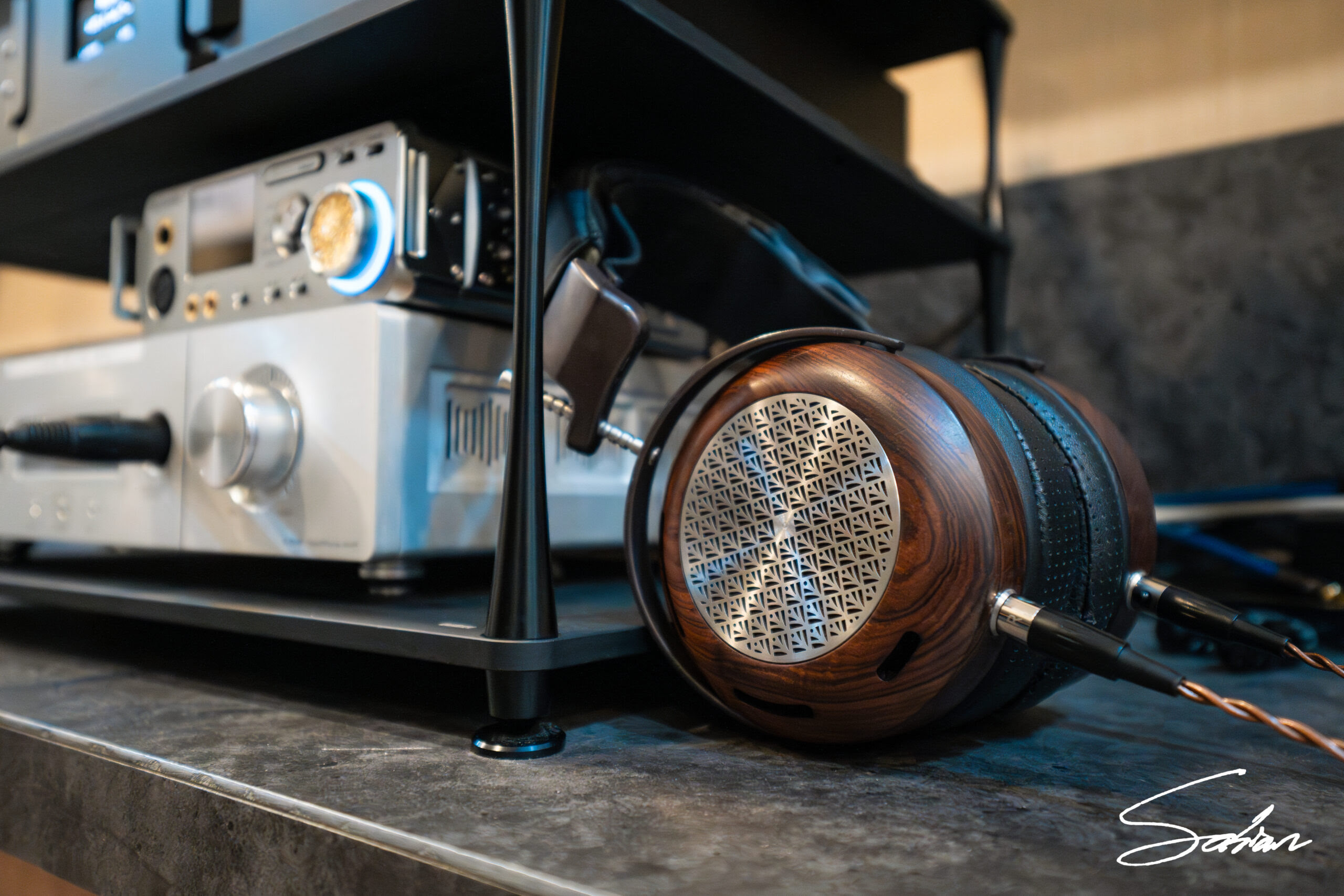
If you do find the Mjolnir’s line output a tad polite for your amp, something you could do is turn up its gain, where it’ll get livelier and punchier (especially in the mid-bass) whilst preserving its tidiness. Or, you could do the opposite if you’re already on high-gain, and you’re finding it a bit rowdy. Obviously, the drawback with these would be a lack of pre-amped gain for your amp to work with, or too much going into the amp, leaving you with less workable increments on the volume knob, particularly with IEMs and/or sensitive headphones.
Verdict
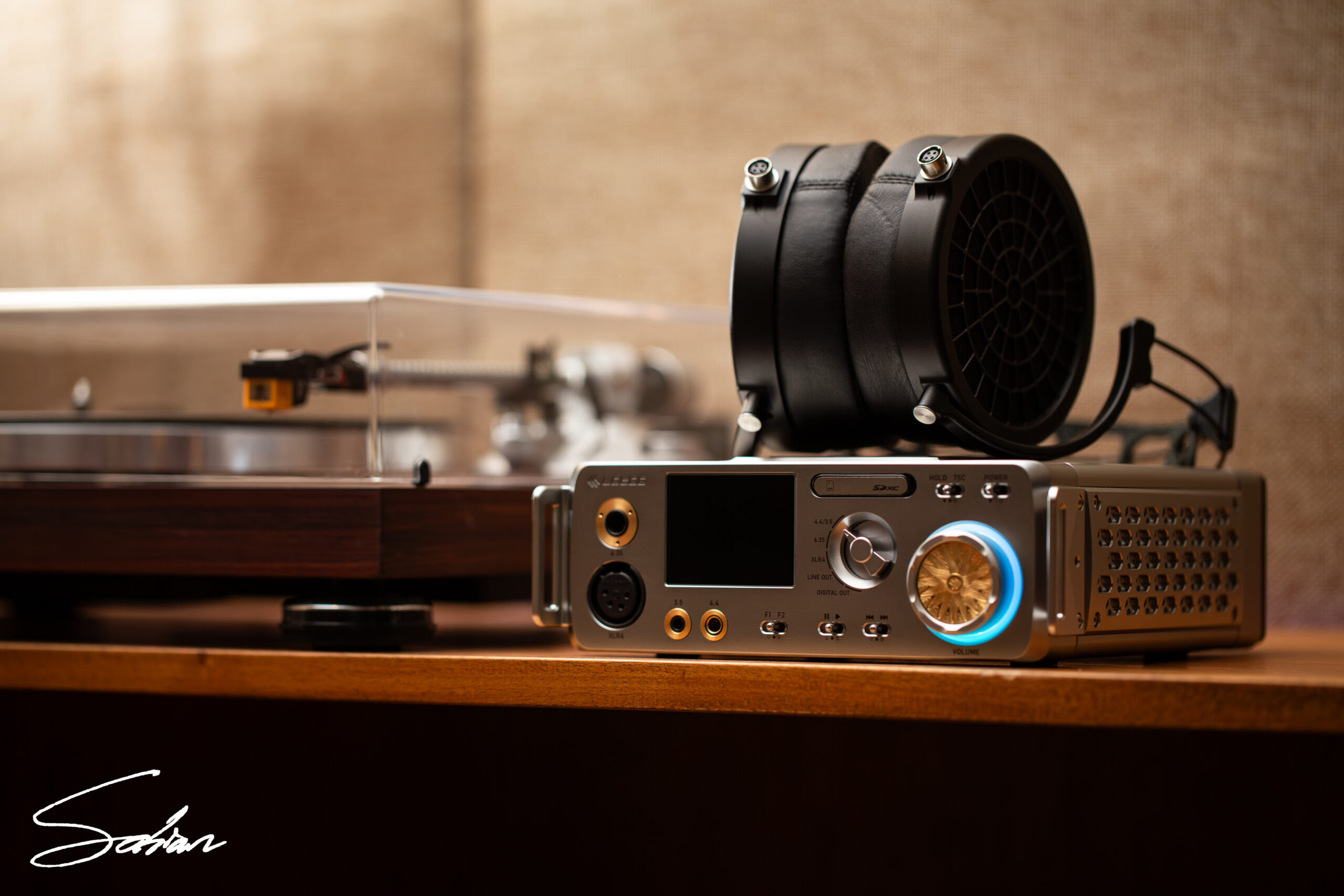
The Lotoo Mjolnir is a statement piece in every possible sense of the term. It’s a machine that’s completely its own, that undertakes the immensely ambitious task of being an all-in-one device and pools the cumulative craft of Lotoo’s entire regime – industrial design, aesthetics, machining, I/O, software, UI, sound, etc. – in one place. The result is a digital audio player that delivers the most neutral, transparent and bit-precise sonics I’ve heard from a (trans)portable source, while giving desktop setups a run for their money. That last bit is where I urge you to ask questions, though. Is the Mjolnir worth purchasing over a desktop DAC and amp for the same amount? Is it worth it if you don’t plan on carrying it around?
In my personal opinion, the Mjolnir isn’t a device to get if you’re already set on getting a heavy-duty desktop rig. If you’ve already made peace with being “chained” to a massive DAC and a massive amp, you’ll probably get more for your money there than investing in one of these. Similarly, it’d be a bit of a waste to get it just for a DAC upgrade, if you already have a great one. I think it best serves someone who wants unbeatable quality on-the-go, or someone who wants an all-in-one for now, with plans to add a desktop amp somewhere down the line.
Regardless of whether or not the product is for you, however, I don’t think anyone can deny that Lotoo have absolutely put their best foot forward with the Mjolnir. While it trips ever-so-slightly in accessories and software – issues I hope Lotoo are willing to work on and update – I do not think Lotoo (or any brand in the world, for that matter) could’ve done better in every other department. It’s the best-built, best-feeling and best-sounding portable device I’ve personally ever used, and I’m glad that it is, given its massive price tag. If it is an investment you can afford to make, and if its use case makes sense to you, there’s virtually no better machine out there. I salute Lotoo for their work here, I look forward to seeing it evolve, and I can’t wait to see its quality trickle down to their future releases as well.



One Response
What’s up with randomly bold fonts? Makes no sense