Sound impressions
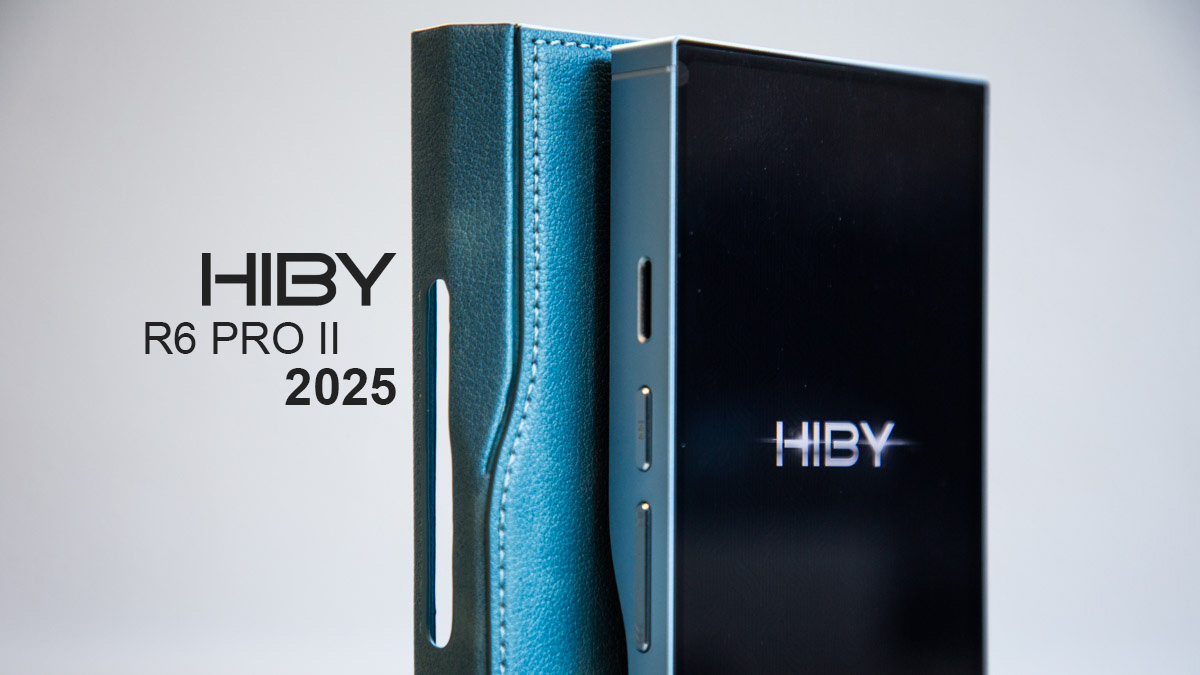
And now, the main course. Specs and features are all well and good, but in the end a DAP lives or dies by how it makes your music sound. The new R6 Pro II carries dual Cirrus Logic CS4308P DACs, replacing the AKM chips of its predecessor. Numbers tell you they’ll decode PCM up to 32-bit/768kHz, DSD512, and even MQA. But what matters is the presentation.
The first thing that strikes you is the authority. With almost double the output power of the original, the new R6 Pro II has a confidence that translates directly into the music. Plugging in a pair of planar magnetic IEMs that used to sound a little underfed, suddenly the bass firmed up, the mids gained body, and there was a sense of space opening up around instruments. It’s not brute force – it’s finesse born of headroom.

Bass
For low-end testing, I turned to Def Leppard’s Pour Some Sugar On Me, a track whose swagger depends on that driving, chesty bass line. On the HiBy, the opening riff landed with a solidity the older model never quite nailed. There’s punch, there’s depth, and crucially, there’s control. It never spills into the mids, even when you crank the volume.
The Eagles’ Hotel California, with its iconic opening, is another good test. The kick drum felt more rounded, better defined, and the bass guitar’s texture more tactile. It’s not just about boom; it’s about nuance – the difference between a thud and a resonant note. The HiBy leans toward the latter, and it makes the track far more involving.
In Class A mode, the effect is even more visceral. The bass gains an extra layer of warmth and density, the sort that makes your foot tap involuntarily. Switch to Class AB, and you lose a little of that richness but gain slightly better efficiency. Both modes have their charms; it depends whether you’re after indulgence or practicality.

Midrange
The midrange is often where DAPs distinguish themselves, and the new R6 Pro II does not disappoint. Missy Higgins’ Scar is a vocal-led track that can sound thin on less capable players. Here, her voice was lush, textured, and convincingly placed in front of me. There’s a smoothness that flatters vocals without airbrushing away character.
Similarly, Eva Cassidy’s rendition of Fields of Gold is a brutal test of timbre. Her voice can tip into sibilance if gear isn’t well behaved. The HiBy kept her tone silky and natural, with just enough edge to preserve intimacy. The guitar accompaniment had body and shimmer, layered behind the vocal rather than competing with it.
This forward, vivid presentation means singers are brought closer to the listener. It’s not in-your-face aggressive, but there’s an intimacy that pulls you into the performance. On Lana Del Rey’s Young and Beautiful, the smoky allure of her delivery was spellbinding, with the orchestral swells rising behind her in rich detail.

Treble
The top end is lively yet smooth, a tricky balance to strike. On The Cranberries’ Linger, the jangle of guitars and the sparkle of cymbals were airy and crisp, but never sharp enough to grate. Dolores O’Riordan’s voice retained its plaintive fragility without tipping into harshness.
A sterner test is Pink Floyd’s Time, particularly the infamous battery of clocks at the beginning. On bright gear, this can feel like being assaulted with a frying pan. On the HiBy, the chimes rang out with clarity and decay, each distinct, without ever becoming abrasive. The treble extends, but it doesn’t pierce – a relief for long listening sessions.
What’s particularly impressive is the way treble integrates with the mids. Some players feel disjointed, as if the top and middle registers come from different sources. Here, there’s coherence: cymbals shimmer naturally above guitars, vocals float within the mix, and nothing feels tacked on.

Dynamics and stage
If you want to test a player’s sense of drama, there’s no better track than Dire Straits’ Telegraph Road. Its slow build demands patience and dynamic headroom. The new R6 Pro II handled it with aplomb: the quiet opening passages whispered convincingly, while the crescendos swelled with scale and weight. The jump from soft to loud was executed with authority, without collapsing into congestion.
Soundstage is wide and reasonably deep, aided by the extra power and headroom. Listening to Lana Del Rey’s Born to Die, the strings unfurled in a spacious arc, leaving her voice anchored in the centre. Instruments had room to breathe, and the layering meant nothing felt smudged.
It’s not the cavernous stage you’d get from a full desktop rig, but for a portable device it’s impressive. Even on dense mixes, like Def Leppard’s Hysteria, the player maintained separation, keeping guitars, drums, and vocals distinct. At times, with extremely busy arrangements, a little crowding crept in – but never to the point of collapse.

Continue to select comparisons…