Sound impressions
FTS and Orpheus clearly share a similar lineage, appearance, and technology, but they very quickly start to diverge when it comes to their personalities. Where I described Orpheus as liquid honey, FTS is…not that. It’s more like honeycomb. That Orpheus liquidity is replaced by a drier, less romantic sound, more biting and revealing, less smooth and soothing.
I’ll quickly make the point here that by ‘sound’ I don’t mean of the actual cable, but rather the effect it has on the sound of whichever IEM you happen to be using. PW Audio’s flagship cables add significant colour to the sound of most IEMs, and so impose their personalities on anything you connect them to, but they don’t have a sound of their own, so to speak.
Connected to FIR’s Radon 6 as my reference and running though my usual test tracks of sultry female indie songstresses, a smattering of cinematic soundtracks, and some classic rock and classical music, it’s the tonal differences between FTS and Orphy that quickly become obvious.
Starting with the positives, the way FTS helps shape, control, tighten and extend the bass frequencies is almost perfect. You’ll hear every nuance of bass texture your IEMs are capable of producing, down to the lowest sub-bass octave.
Where Orpheus adds some bulk to midbass, FTS keeps it linear, so you’ll invariably hear less bass comparatively, although quality is retained throughout the range. Drums still kick with authority, and the leaner midbass gives the sub frequencies a bit more room to stretch out.
I’m not sure if this results in less rumble, but it certainly feels less physical than I experienced with Orphy. Bass decay also seems to be slightly faster, so if you’re into fast-paced energetic music with drumbeats hitting at 140bpm, FTS could be just the tonic.
Moving upward, FTS maintains its linear tuning, and seems far less coloured than Orphy in the midrange fundamentals. I’ll get to technical performance later, but FTS’s strengths invariably stem from its clear, crisp, transparent and utterly resolving midrange performance. You’re going to hear every microdetail your IEMs are capable of producing, and that’s not hyperbole or exaggeration.
If ever there was a cable that magnified detail in the midrange, FTS is it.
While I believe FTS’s performance here has something to do with its tonal balance – leaner and meaner compared to Orphy’s warmer organic – I don’t think FTS quite crosses the line towards sterility. It’s a drier midrange for sure, more biting and incisive than Orphy, but still very well controlled and mostly natural.
That said, if your IEMs lean analytical, or are tuned with lighter or thinner midrange notes, FTS won’t bulk them up like Orphy, and may even make them leaner still.
Where FTS does cross the line for me is treble. While some might find FTS’s light, bright, energetic and ultra-detailed treble delivery exceptional, to me it pushes most IEMs – even those without excessive treble energy – too close to bright for my liking.
Objectively speaking it’s difficult to fault FTS here, and I can imagine many of you reading this licking your lips at the prospect of a monster cable opening up and boosting the treble performance of your best IEMs. But for my taste, too much treble – good as it may be – is just that, too much, and I find myself fatiguing rather quickly when listening to female vocalists with any sort of grain in their vocal overtones.
Where Orphy reigns in the treble and paints it with a softer hue, FTS gives it a spit-and-polish, bringing highlight details front and centre. This has the added effect of opening up the stage and injecting air into almost every performance, so if it’s earthy you want, FTS is unlikely to deliver.

Tonally, then, FTS is the antithesis of dark. It’s a revealing cable that I want to call bright, but without the negative connotations that word usually implies when it comes to audio. It literally swings opposite to Orphy in that regard, and while I don’t consider Orphy dark, it definitely leans more relaxing, romantic and smooth.
FTS can still be smooth, but it’s not a cable I’d pair with easy listening IEMs unless it’s not easy listening you want. It’s unflinching and unforgiving, which can be wonderous if your music quality is supreme, but potentially horrific when it’s not.
Technical performance is where FTS really earns its keep, and for those who can afford it, possibly even justifies its hefty price tag. While Orphy’s magic comes in part from its technical ability despite the warm, organic spell it casts over most IEMs, FTS is unapologetically technical without any airs or graces.
You’ll hear a soundstage that stretches to the extremes of your IEMs’ capabilities, and possibly even beyond what you thought they were capable of. I actually find FTS makes my reference IEMs sound wider than they did with Orpheus, but they can’t quite match the depth that Orphy added to their stage.
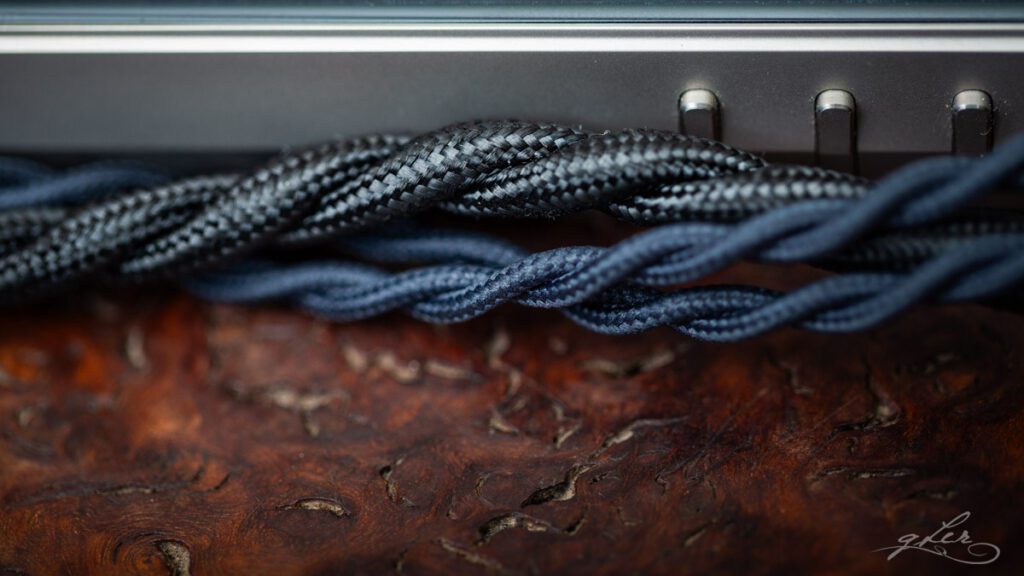
This is likely because of FTS’s supreme imaging and separation ability. I’m yet to hear an instrument, vocal or sound effect that doesn’t have its own space, and it’s a rare (poorly mastered) recording where there’s any smearing going on while FTS is in play. If your IEM is technically proficient, FTS will make it more so, and might even make your average IEMs sound surprisingly competent too.
Like Orphy, FTS darkens the background significantly, so sounds appear from nowhere and disappear from where they came. This gives already-dynamic IEMs an extra zest, and wakes up the sleepiest of IEMs from their slumber.
Last but not least, FTS is one of the most resolving cables I’ve heard. Yes, I mentioned this earlier, but it bears repeating here. It’s as if all the tonal and technical elements are aligned with the specific goal of teasing every possible detail from the music, and while the effect might be startling and impressive at first, I did find it getting on my nerves after a while.
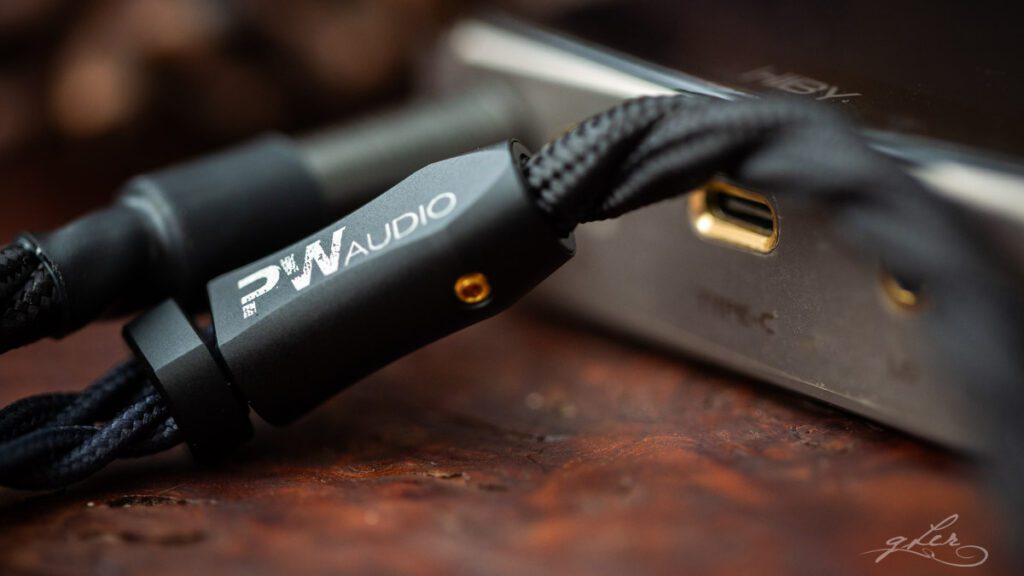
I’m not sure if FTS crosses the line of fake detail, because I think that really depends on the IEM, but it can and does push some IEMs over the line for me, to the point where it’s just too much of a good thing. Again, this comes down to preference, because I didn’t personally find Orphy’s warmth too much even with warmer IEMs, so I’m sure that those for whom no amount of detail is enough will find much to love here.
Continue to select pairings…